Carpenter Ants vs Termites: How to Tell the Difference
Carpenter ants or termites? Compare body shape, wings, damage, debris and nest clues side by side, then learn what to do next and when to call a pro.
 Save
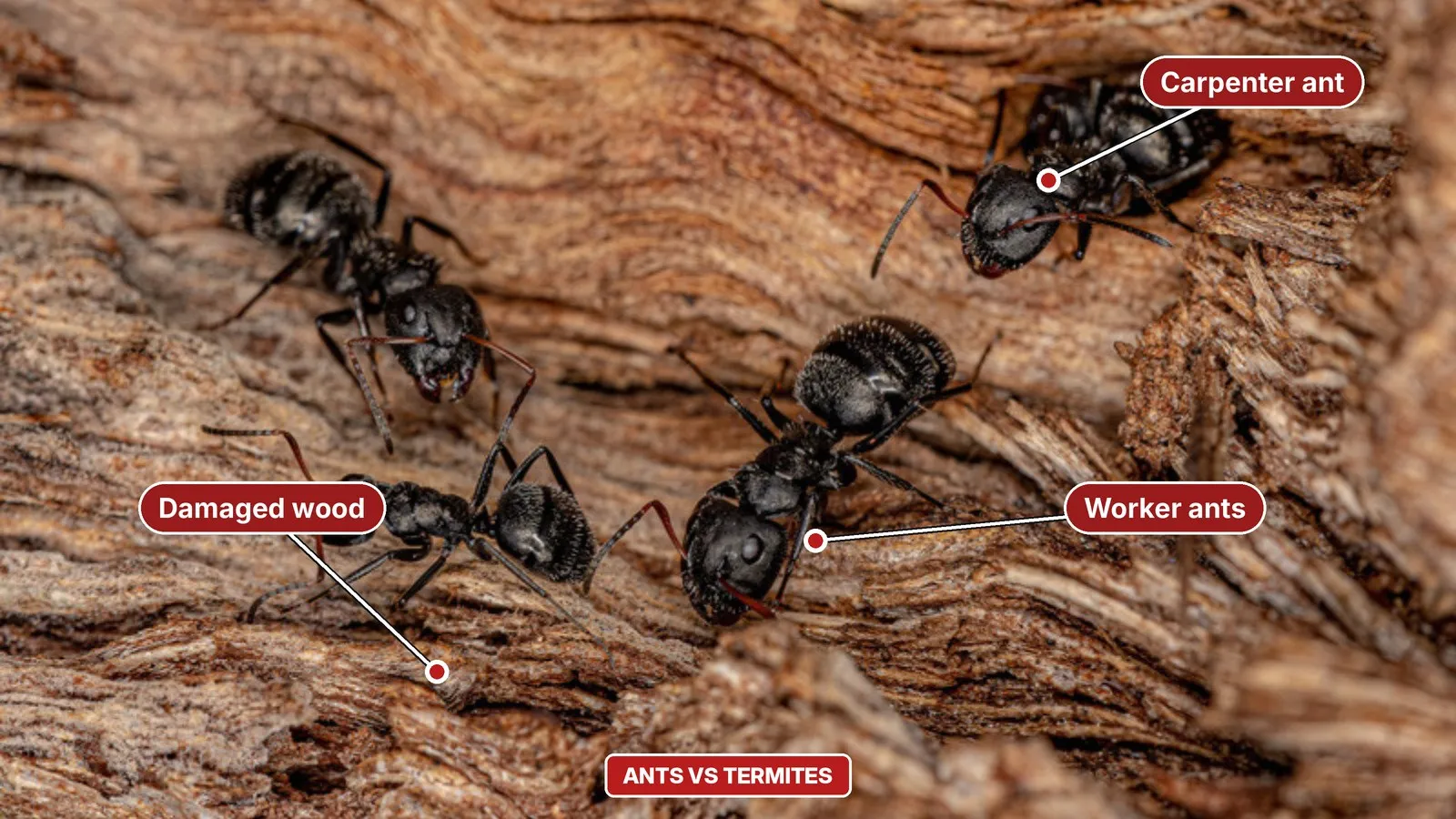
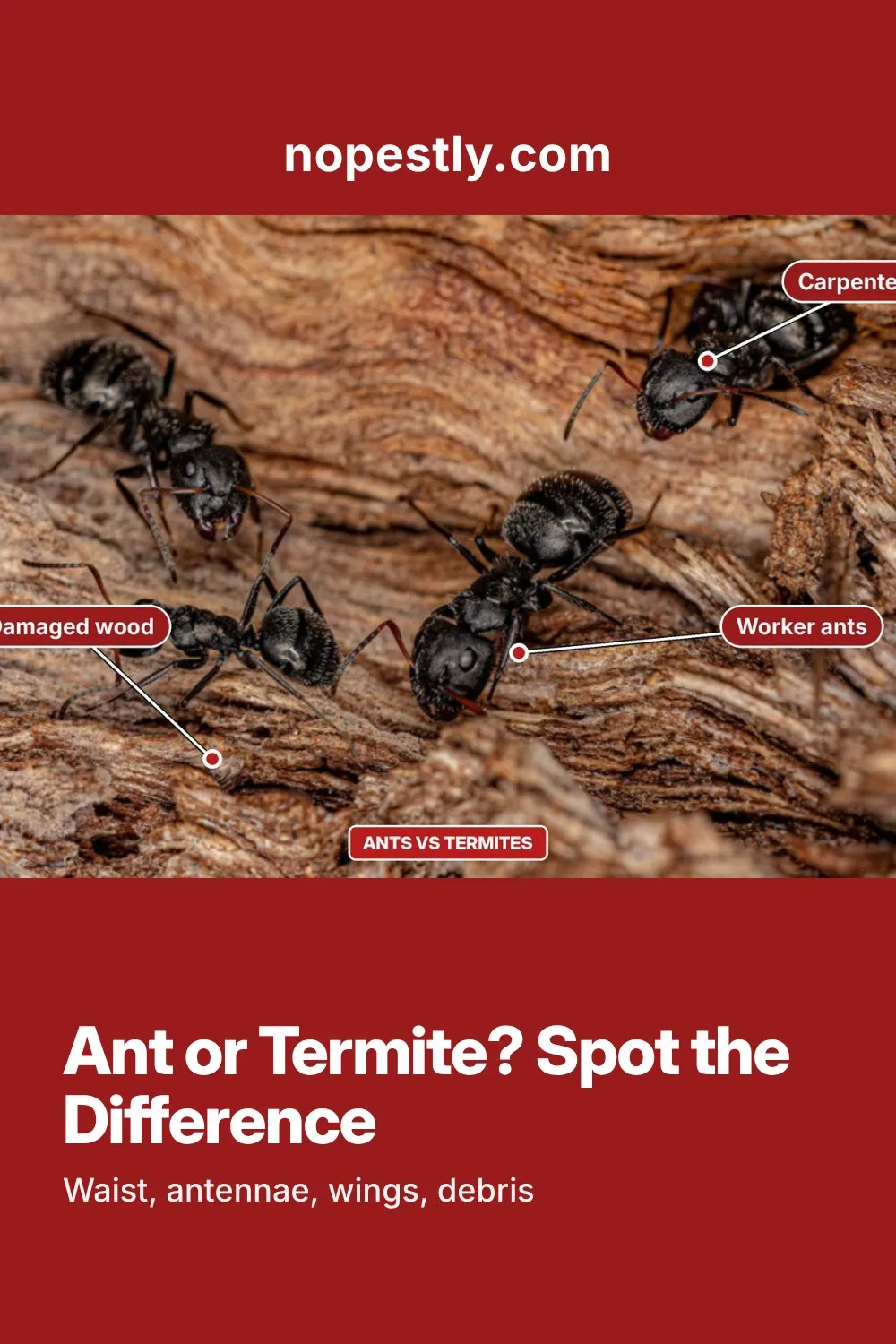
The quickest way to tell carpenter ants from termites is to look at the body. Carpenter ants have a pinched waist, bent (elbowed) antennae and a dark color, while termites have a thick, straight waist, straight antennae and a pale to brownish body. The debris and damage also differ, and the difference matters because the two pests need different treatment.
Key points
- Check the waist. Ants have a clearly pinched waist between thorax and abdomen. Termites look like one thick, straight-sided body.
- Look at the antennae. Carpenter ant antennae are bent at an angle. Termite antennae are straight.
- Compare the wings. Swarming ants have front wings longer than the back pair. Swarming termites have wings of roughly equal size.
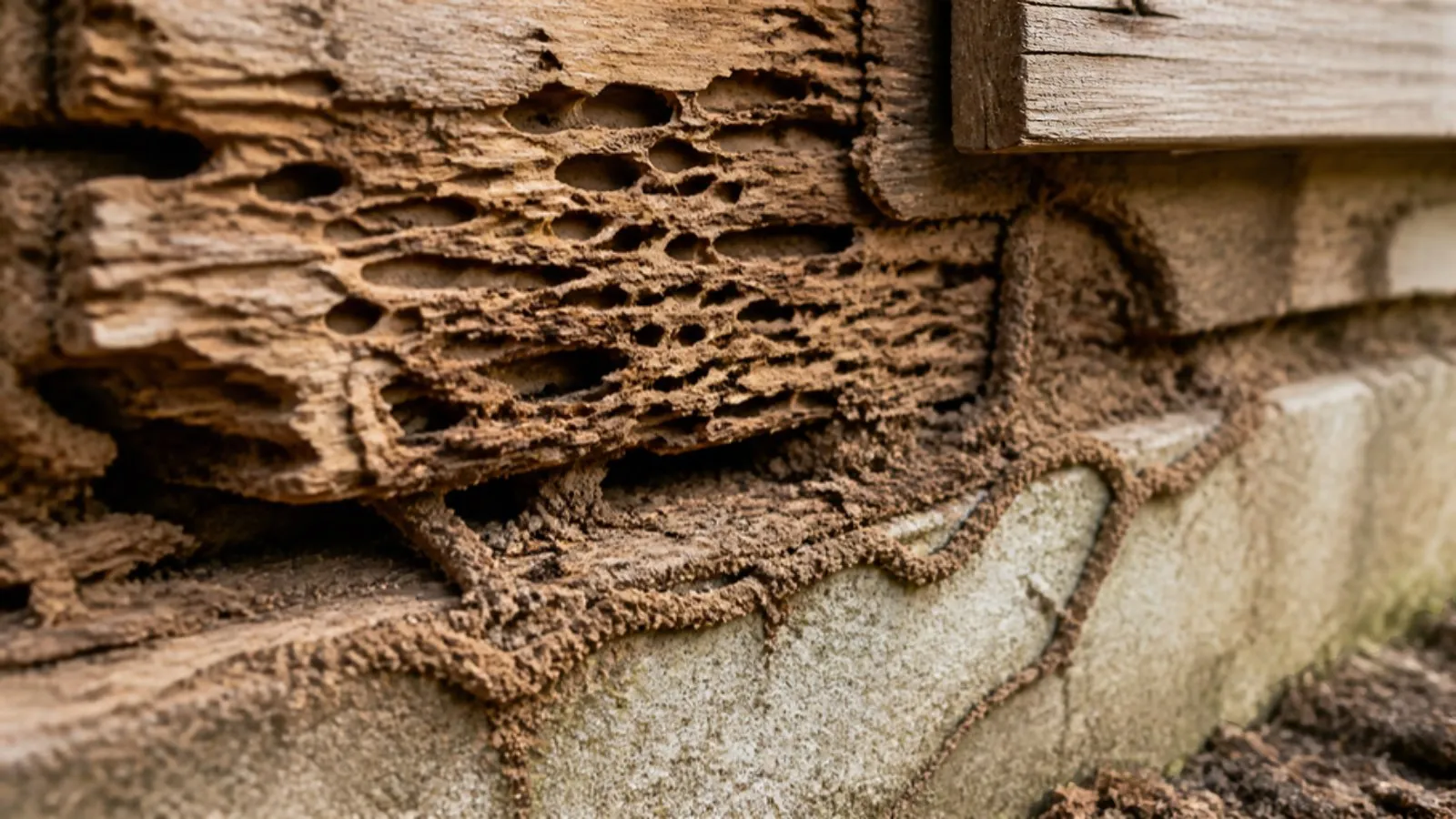
- Read the debris. Carpenter ants push out coarse, sawdust-like shavings. Termites leave mud tubes (subterranean) or small pellets (drywood).
- Inspect the tunnels. Carpenter ant galleries look smooth and sanded. Termite galleries are rough and often caked with mud.
- Do not guess on treatment. Ants and termites are treated differently, so confirm the pest first, ideally with a licensed professional.
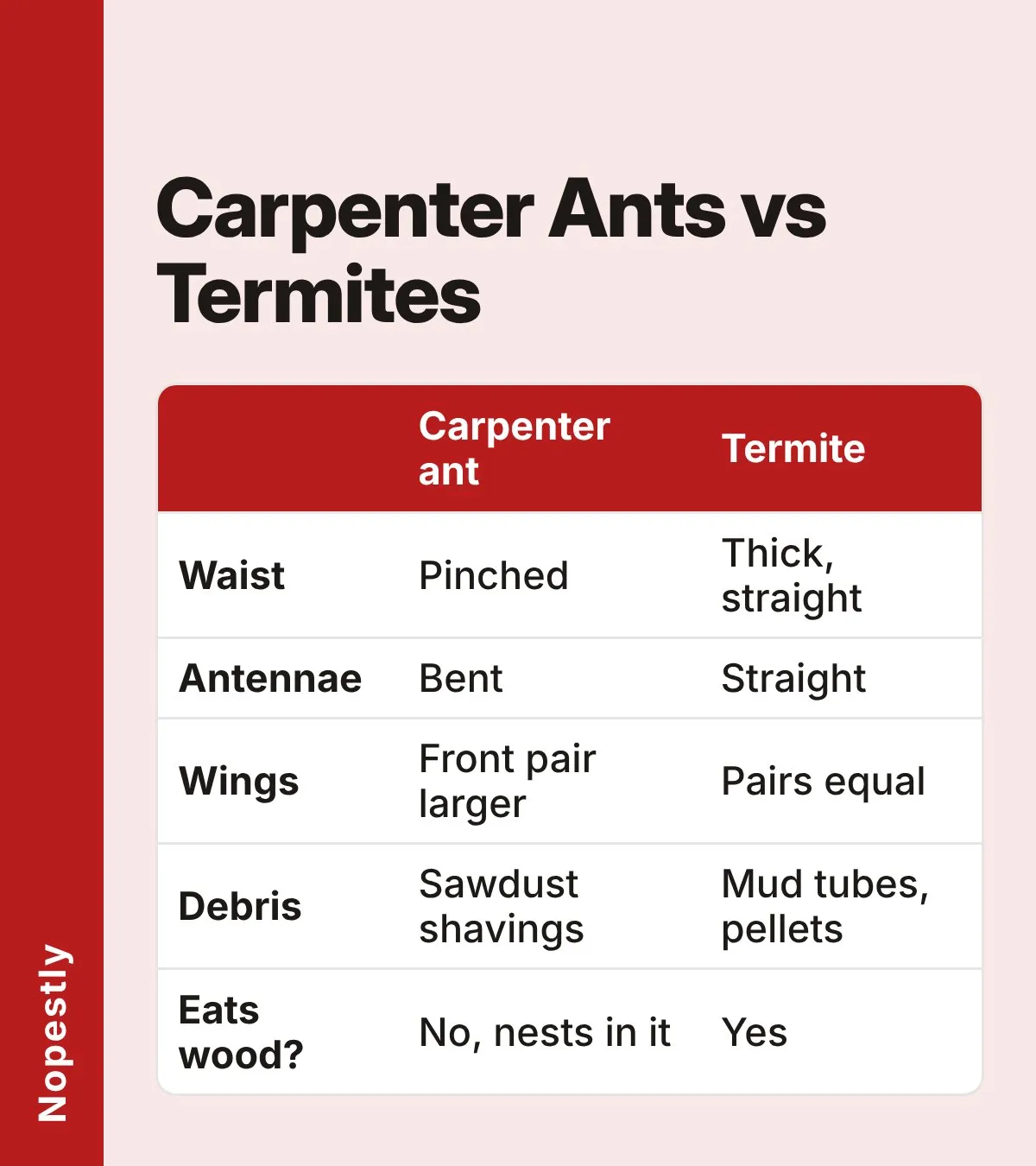
Side-by-side comparison
| Feature | Carpenter ant | Termite |
|---|---|---|
| Waist | Narrow, pinched | Thick, straight |
| Antennae | Bent or elbowed | Straight |
| Wings (swarmers) | Front pair larger than back pair | Both pairs about equal |
| Color | Dark: black, sometimes reddish | Pale, creamy to brown |
| Eats wood? | No, it tunnels to nest | Yes, it digests cellulose |
| Debris | Coarse sawdust-like shavings | Mud tubes or small pellets |
| Gallery walls | Smooth, sanded | Rough, uneven, often muddy |
| Speed of damage | Usually slower, over years | Can be fast in large colonies |
Why the difference matters
Termites digest the cellulose in wood, so a colony feeds on your house from the inside. The surface can look normal while the interior is hollowed out. Carpenter ants cannot digest wood. They remove it to make nest space, and they favor wood that is already wet or damaged, such as window frames, crawl spaces and areas around sinks.
Both pests need moisture, so a leak or poor drainage often explains why either one is there. Colony size also differs. Established termite colonies can hold tens of thousands to more than a million workers, which is why delay is costly. If you suspect termites, read our guide to the signs of termites in your house.
What the swarmers tell you
Winged insects indoors are often the first thing homeowners notice. Carpenter ant swarmers are fairly large, roughly one-half to five-eighths of an inch, and black or occasionally red. Termite swarmers are smaller, about three-eighths of an inch including wings, and black to brown with smoky or milky wings.
Use the three-feature test with a magnifying glass or a clear photo:
- Antennae: bent means ant, straight means termite.
- Waist: pinched means ant, thick means termite.
- Wings: unequal pairs mean ant, equal pairs mean termite.
Shed wings piled on a windowsill are a termite clue, because termites drop their wings after swarming. Save a few insects in a sealed bag or a taped-down piece of clear tape so a professional can confirm the species.
Step-by-step: tell which pest you have
| Step | What to do |
|---|---|
| 1 | Catch a specimen. Collect a few insects or shed wings in a sealed container or on clear tape. A dead sample is fine for identification. |
| 2 | Check the body shape. Look at the waist, antennae and wings with a magnifier. Use the table above to match them. |
| 3 | Look at the debris. Coarse, sawdust-like shavings below a wall or frame point to carpenter ants. Mud tubes on foundations or pellets near wood point to termites. |
| 4 | Probe the wood gently. Press a screwdriver into suspect wood. Smooth, clean tunnels suggest ants, and rough, mud-packed or layered tunnels suggest termites. |
| 5 | Find the moisture. Check for leaks under sinks, around windows, roof flashing and in crawl spaces. Damp wood is the common link. |
| 6 | Photograph and call. Take clear photos of insects, debris and damage, then book a licensed pest professional to confirm and plan treatment. |
What to do next
If it looks like carpenter ants, fix the moisture source first and trim branches or shrubs touching the house. Ants often travel along those. Baits and targeted treatment near the nest work best, and the baiting basics in how to get rid of ants in the kitchen apply to ant trails, though a nest inside wall wood usually needs a professional.
If it looks like termites, avoid disturbing the area. Extension specialists generally do not recommend DIY treatment of an active termite infestation, so arrange an inspection and a written treatment plan.
Common mistakes
- Treating before identifying. Ant sprays do nothing to a termite colony hidden in the wall.
- Assuming any winged insect is a “flying ant.” Check the waist, antennae and wings.
- Ignoring moisture. Dry the wood and fix leaks, or the problem returns.
- Disturbing mud tubes and sawdust before photographing them. They are useful evidence.
- Waiting. Termite damage can build quickly, and ants may signal rotted wood that needs repair.
When to call a professional
Call a licensed pest professional if you find swarmers indoors, mud tubes, hollow-sounding or soft wood, shed wings, or sawdust-like debris that keeps returning. Signs can overlap between the two pests, and the correct treatment depends on a correct identification. Ask for a written report and whether structural or moisture repairs are advised. Regulations and licensing differ by state, province and country.
Sources
 Save
Frequently asked questions
Can carpenter ants and termites live in the same house?
Yes. Both are attracted to damp or damaged wood, so they can occur in the same structure. Finding one pest does not rule out the other, which is why a professional inspection is worth booking.
Which one is more destructive, carpenter ants or termites?
Termites are generally the more destructive pest, because they eat the wood and large colonies can damage a structure quickly. Carpenter ant damage usually builds more slowly, often over years.
Do carpenter ants eat wood?
No. They cannot digest wood. They excavate tunnels and chambers to nest in it and push the shavings out, which is why they leave sawdust-like debris.
Can I tell them apart from the wood damage alone?
Often, but not always. Carpenter ant galleries look smooth and sanded, while termite galleries are rough and may be packed with mud. Because signs can overlap, confirm the pest before treating.