Signs of Termites in Your House
Learn the signs of termites: mud tubes, swarmers and shed wings, hollow or soft wood, frass and bubbling paint, plus how to inspect and when to call a pro.
 Save
The clearest signs of termites are pencil-width mud tubes on foundation walls, winged swarmers or their shed wings indoors, wood that sounds hollow or feels soft when probed, and small pellet-like droppings called frass. Termites usually work out of sight, so even one of these signs is a reason to inspect carefully and call a licensed professional.
Quick answer
- Walk the foundation and crawl space looking for thin tubes of dried soil.
- Check windowsills, light fixtures and spider webs for discarded wings.
- Tap baseboards, door frames and joists with a screwdriver handle and listen for a hollow sound.
- Look for tiny pellets or a gritty film near damaged wood.
- If you find anything that looks active, stop probing and book an inspection.
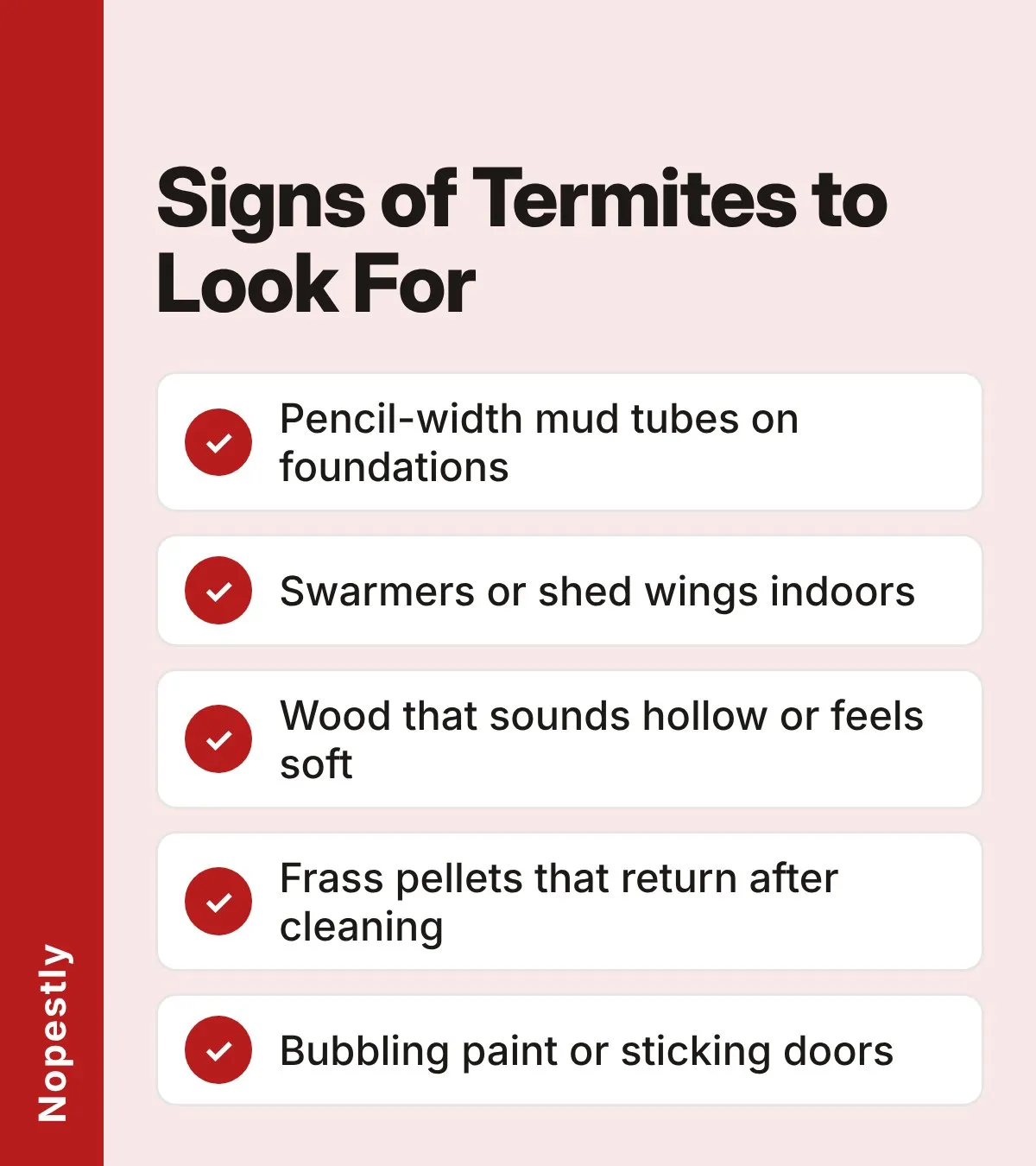
The main signs of termites
Different termite types leave different clues. Subterranean termites live in the soil and travel to your house through tubes. Drywood termites live inside the wood itself and leave pellets. The table below sums up what each sign looks like and what it usually means.
| Sign | What you will see | What it usually means |
|---|---|---|
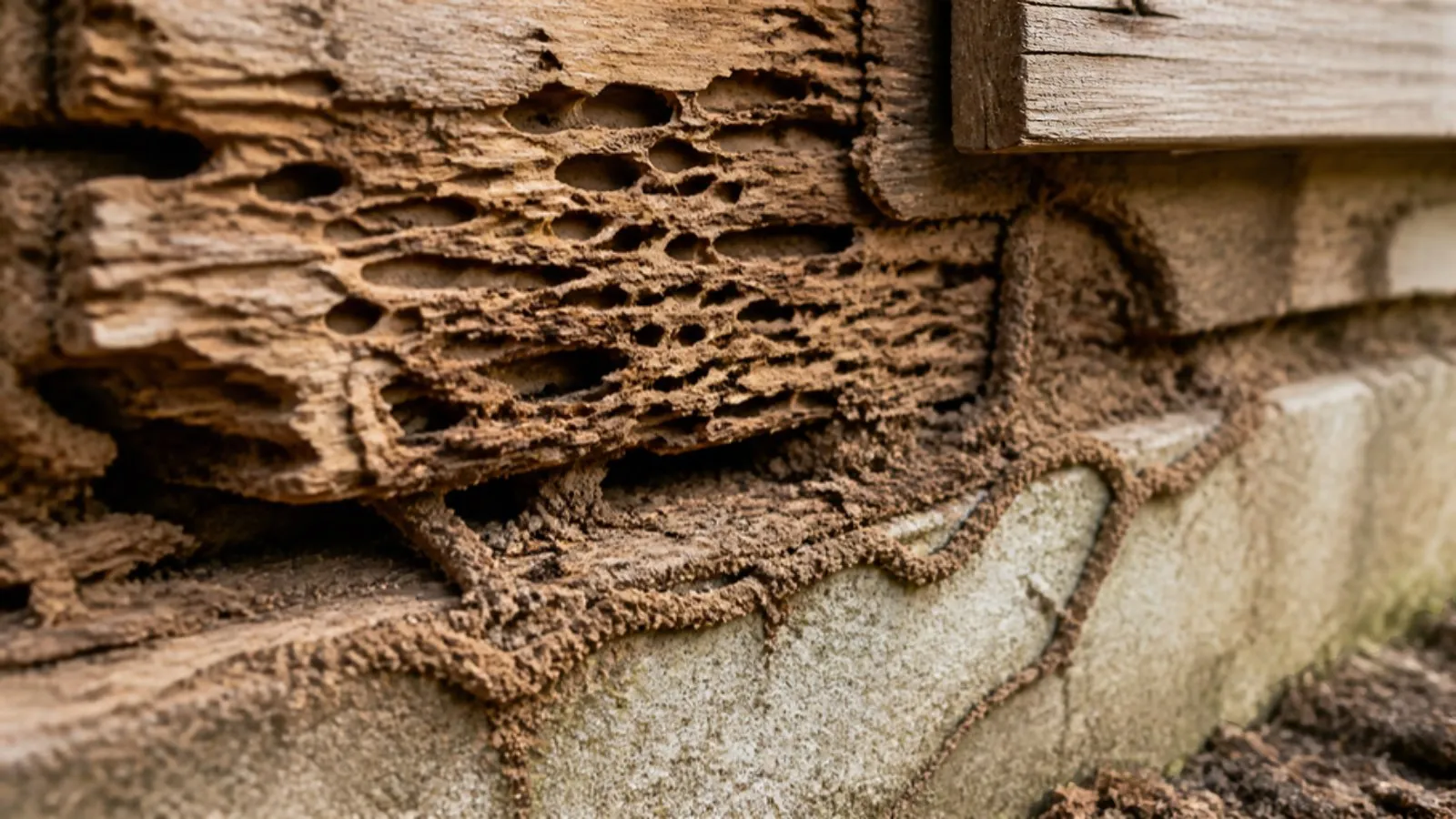
| Mud tubes | Pencil-width tunnels of soil on foundations, slabs, joists or crawl space walls | Subterranean termites traveling between soil and wood |
| Swarmers | Winged insects indoors or around windows and lights | A mature colony is releasing reproductives; indoors, likely an infestation in the house |
| Shed wings | Small, matching wings on sills or in spider webs | Swarmers have already landed and dropped their wings |
| Hollow wood | Wood that sounds papery or hollow when tapped | Termites have eaten the interior, leaving a thin shell |
| Soft or crushed wood | Wood a screwdriver sinks into easily, sometimes with a thin gritty gray-brown film | Active or past feeding damage |
| Frass | Small pellets like sawdust, sand or coffee grounds that return after cleaning | Drywood termites pushing waste out of their galleries |
| Moisture-like damage | Bubbling or discolored paint, sticking doors and windows, warped floors, loose tiles | Hidden damage or a moisture problem that termites exploit |
Mud tubes: what to look for
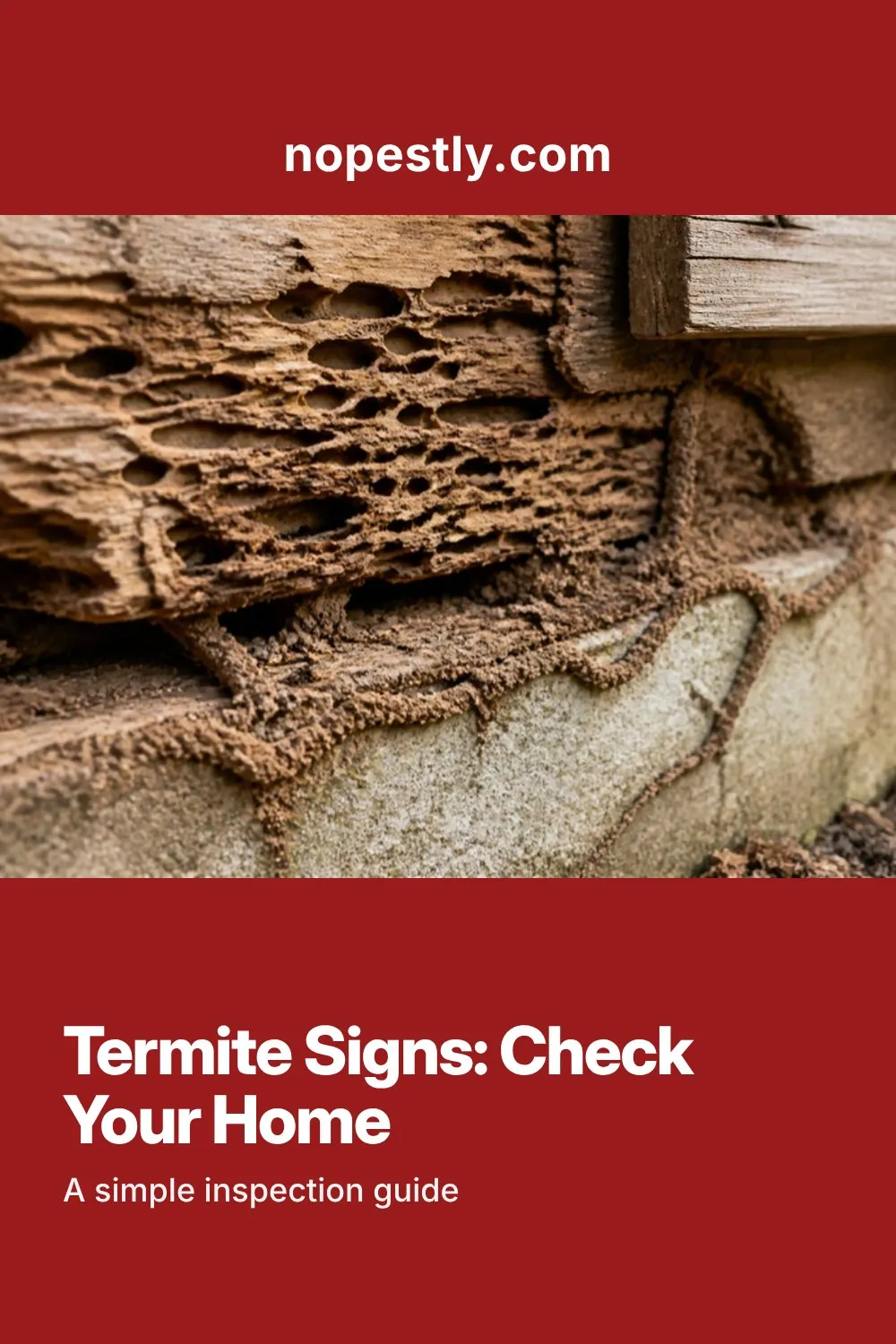
Termites avoid open air because they need humidity and protection, so they build covered tubes from soil and saliva. Look along the foundation, on floor joists and subflooring, and in wall cracks. Tubes high on a wall or near a ceiling, especially ones that contain wood or drywall bits rather than just soil, can point to an above-ground infestation that is usually tied to moisture.
To check whether a tube is active, break off a small section and look inside. Live termites, or a tube repaired within a few days, means activity. An empty tube does not prove they are gone, because termites abandon and rebuild tunnels. Old tubes are dry and crumble, and can leave an etched mark on the surface that stays visible for years.
Swarmers and shed wings
A colony typically needs several years to mature before it produces winged swarmers. Swarms often happen on warm days after rain, and in many regions the season runs from late winter or spring into fall. Swarmers seen outdoors near a stump or landscape timber do not necessarily mean your house is infested. Swarming indoors, however, usually means a colony is somewhere inside the structure.
Several ants also swarm at similar times, so check the insect before you panic.
| Feature | Termite swarmer | Flying ant |
|---|---|---|
| Antennae | Straight | Bent (elbowed) |
| Wings | Two pairs, same length | Front pair longer than back pair |
| Waist | Thick, no clear pinch | Narrow, pinched |
Catch one in a jar or tape it to a card so a professional can identify it. For ant problems in other parts of the house, see How to Get Rid of Ants in the Kitchen.
Hollow, soft or damaged wood
Termites eat the inside of wood and leave the surface, so damage often looks fine until you test it. Tap likely spots with the handle of a screwdriver and listen for a hollow or papery sound. Probe suspicious wood gently with the tip: sound wood resists, damaged wood sinks in easily. Termites feed on anything with cellulose, including paper, cardboard, paneling and the paper facing of drywall, and they can tunnel through foam board or plastic to reach it.
Damage cannot be dated accurately, so it helps to note the dates of past inspections. They give you a reference point for when the wood was last known to be sound.
What you need for a DIY check
- A bright flashlight
- A screwdriver with a sturdy handle
- A small jar or clear tape for samples
- A notepad or phone to photograph and date what you find
- Disposable gloves and a dust mask for crawl spaces
Step-by-step: inspect your home
| Step | What to do |
|---|---|
| 1 | Start outside. Walk the full foundation. Look for mud tubes, soil piled against wood, and wood touching the ground such as stair stringers, deck posts and fence boards. |
| 2 | Check moisture sources. Look for leaking gutters, downspouts that drain at the foundation, plumbing leaks and damp spots. Termites favor moist wood. |
| 3 | Go to the crawl space or basement. Shine the light on joists, sill plates and foundation walls. Tap and probe any wood that looks dark, blistered or sagging. |
| 4 | Inspect inside. Check windowsills, door frames, baseboards and attic access points. Look for wings, pellets, bubbling paint or doors that suddenly stick. |
| 5 | Note what you find. Photograph each sign with a coin or ruler for scale, record the date, and do not disturb active areas more than needed. |
| 6 | Call a professional. Bring your notes and any sample. |
Common mistakes
- Treating one old, empty mud tube as proof the problem is gone.
- Spraying swarmers with a household insecticide and assuming the issue is solved. The colony is still there.
- Pulling off damaged wood or breaking tubes widely before an inspector sees them.
- Ignoring moisture. Leaks and poor drainage make a home attractive to termites even after treatment.
- Waiting for the problem to get worse. Termites can stay hidden for years.
When to call a professional
Call a licensed pest professional if you find swarmers indoors, mud tubes you cannot explain, tubes on upper levels or ceilings, hollow or soft wood, or frass that returns after cleaning. Extension specialists advise against DIY treatment of an active infestation, because a proper soil treatment can take dozens of gallons of termiticide and specialized equipment to drill concrete and reach voids. A professional can also tell which termite type you have, which determines the treatment.
Ask for a written inspection report and a treatment plan, and ask whether moisture or structural repairs are recommended. Rules for termite treatment and licensing differ by state, province and country, so check your local regulations. After treatment, regular follow-up inspections help catch any return early.
Sources
 Save
Frequently asked questions
How can I tell a termite swarmer from a flying ant?
Look at three features: termites have straight antennae, two pairs of wings of equal length, and a thick waist. Flying ants have bent antennae, front wings longer than the back pair, and a pinched waist.
Do mud tubes always mean termites are active?
No. Old tubes can stay on a foundation for years after termites have left or moved. Break a small section open: if live termites are inside or the tube is rebuilt within days, treat it as active.
Can termites be in my house without any visible signs?
Yes. Termites feed hidden inside wood and walls, and activity can go unnoticed for years. A periodic inspection by a licensed professional is the only way to be sure.
Should I treat termites myself?
Extension specialists do not recommend DIY treatment for an active infestation. Proper soil treatment takes large volumes of product and specialized equipment, so call a licensed pest professional.