How to Get Rid of Ants in the Kitchen
Follow the ant trail, use bait the right way, clean up without ruining it and seal entry points so kitchen ants stop coming back. Step-by-step guide.
 Save
To get rid of ants in the kitchen, follow their trail, put out bait that workers carry back to the nest, wipe up trails and food sources, and seal the gaps they use. Killing only the ants you can see is the most common mistake, because the colony keeps sending more.
Quick answer
- Watch the trail to find where ants enter and what they are after.
- Place bait right beside the trail, and leave it alone.
- Wipe trails with soapy water and remove food and water sources.
- Once ant numbers have dropped, seal cracks and gaps.
- Call a professional if ants persist or you see sawdust-like debris.
What causes kitchen ants
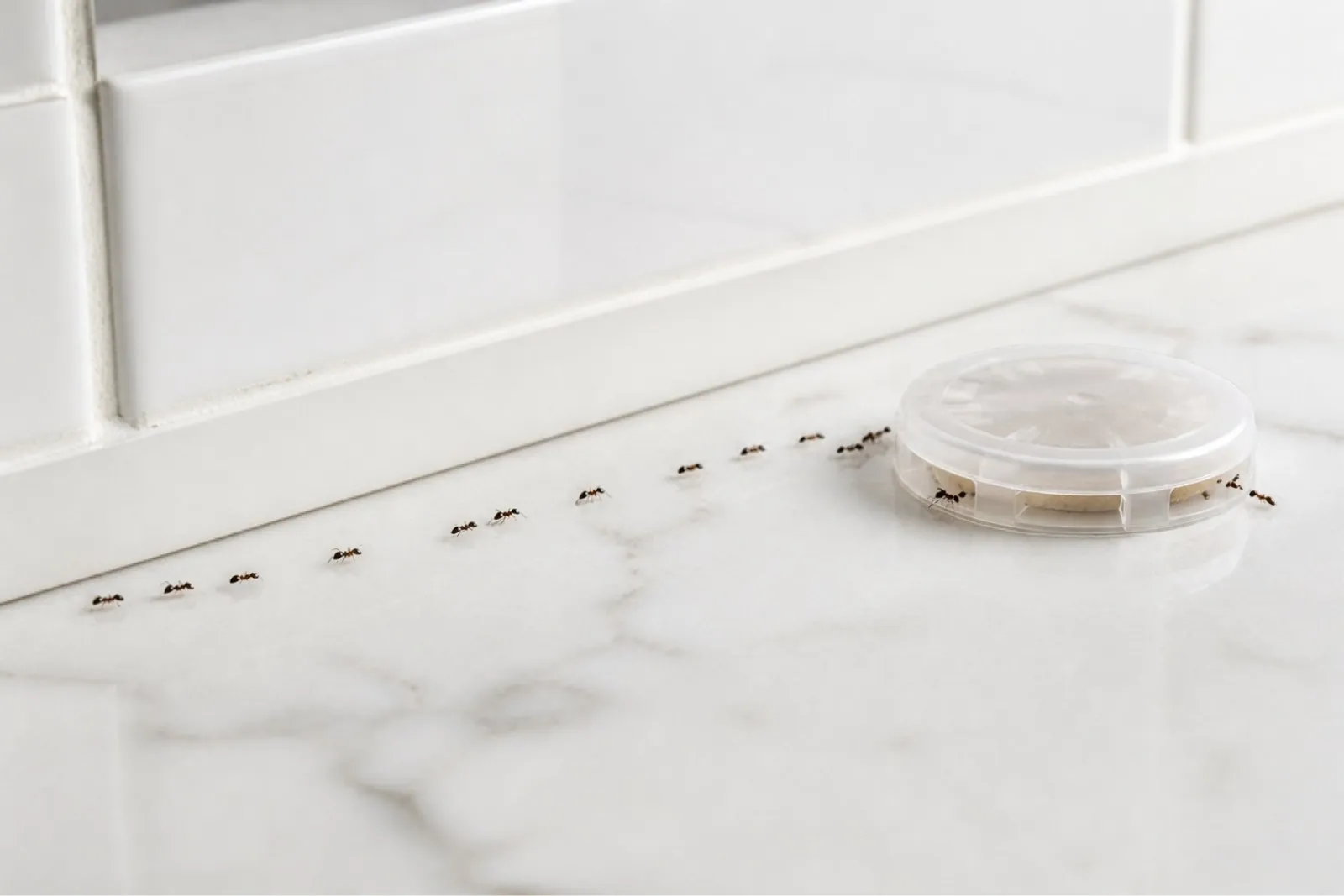
The ants you see walking across the counter are usually scouts, searching for food. When one finds something, it lays a scent trail so others follow. The nest is often outside near the foundation, but it can also sit in a wall, a cabinet or under a floor.
Ants come in for sweet, greasy or protein-rich food, and for water. Crumbs, sticky spills, open sugar or honey, pet food and a leaky faucet (tap) all invite them.
What you need
- Ant bait stations, or gel bait you can apply in thin lines
- Soapy water and paper towels
- Airtight containers for food, including pet food
- Caulk and a caulking gun
- A flashlight
Most baits use ingredients such as borate (the family boric acid belongs to), which act slowly. That delay lets workers carry the bait back and feed the colony, including the queens. Keep every bait away from children and pets, and follow the label.
Step-by-step: how to get rid of ants in the kitchen
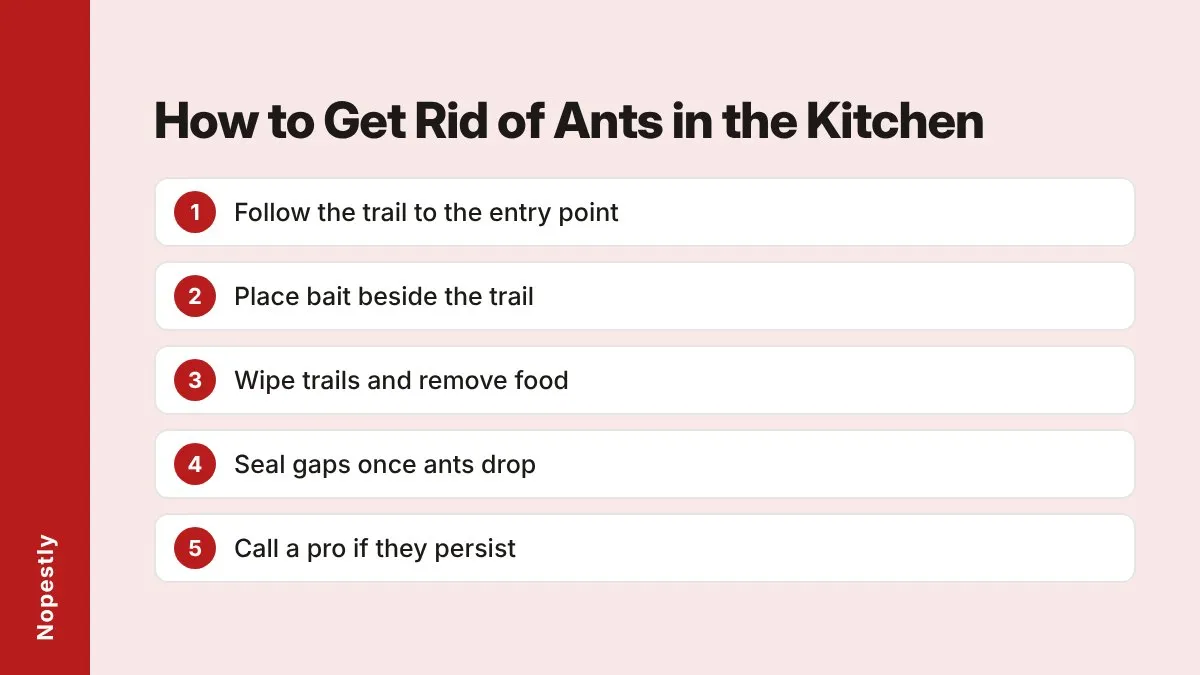
- Find the trail. Watch where ants walk. Check under the sink, along pipes and wires, inside cupboards and along baseboards. Note where they come in and where they head.
- Identify the type if you can. Most kitchen ants are small. Tiny ants with a thin waist and elbowed antennae are ants; a thick waist and straight antennae point to termites instead. Sawdust-like debris suggests carpenter ants.
- Choose bait that suits them. Some ants prefer sweet bait, others protein or grease. If they ignore the bait, try a different type. Offering two kinds side by side can show which they prefer.
- Place the bait next to the trail. Put stations or small dabs of gel where ants walk, not on top of the trail. Several small placements work better than one. Outdoors, space baits roughly 10 to 20 feet (3 to 6 m) apart near foundations and trails.
- Leave the bait alone. Do not spray near it and do not wipe it up. Ants that feed on bait carry it back to the nest, and a spray can stop them from feeding.
- Clean the rest. Wipe trails away from the bait with soapy water, which removes the scent that guides other ants. Hold off cleaning right at bait spots while it is active.
- Cut off food and water. Store sugar, honey, cereal and pet food in sealed containers. Wipe spills, wash dishes promptly, take out the trash often and fix drips.
- Seal entry points. After ant numbers have fallen, caulk cracks around pipes, wires, windows, and the foundation. Sealing too early can stop the bait from reaching its target.
- Trim the outside. Keep shrubs, grass, and mulch back from the foundation so they do not provide a bridge to the house.
Choosing the right bait
Not every bait suits every ant. Prepackaged stations are the easiest to use, but they dry out and need frequent replacement. Gel bait can be placed in thin lines or small dabs along cracks where ants enter, which suits kitchens well. Refillable stations are better for stubborn problems because you can top them up with fresh bait.
Ant diets change by species and by season. Many household ants like sweet bait, while others, such as greasy-food feeders, go for protein or fat. If the ants walk past your bait, the type is probably wrong, not the idea. Swap it, or set two kinds out together and see which one the ants swarm.
Avoid products that kill on contact when your goal is the nest. Fast-acting formulas wipe out the workers before they can carry anything home, so the colony is left untouched.
Keep ants out for good
Once the trail has faded, the long-term job is making your kitchen less attractive and harder to enter.
- Wipe counters after cooking and rinse sticky jars, bottles and cans before recycling.
- Clean up grease around the stove and under appliances.
- Empty the trash often and use a lid.
- Fix leaky faucets and dry the sink overnight, since ants look for water as well as food.
- Check potted plants brought indoors, because ants can nest in the soil.
- Keep plants, grass and mulch a few inches to a foot away from the foundation so they cannot act as bridges.
A temporary emergency stop for a gap is a dab of petroleum jelly, but caulk is the lasting fix once the bait has done its job.
How long to wait
| Stage | What to expect |
|---|---|
| Days 1 to 3 | More ants at the bait. This is normal and a good sign. |
| Days 5 to 10 | Fewer ants as bait reaches the colony. |
| Several weeks | Full control may take longer for large colonies. |
| After that | Refill empty or dried-out stations; seal gaps. |
Bait stations dry out and need replacing, so check them often and refill or swap those that are empty or ignored.
Timing matters outdoors too. Baiting early in the season, before colonies grow large, makes the job easier. If you only start once ants are everywhere, expect to need more stations and more patience.
Common mistakes
| Mistake | Better approach |
|---|---|
| Spraying the ants you see | Use bait so the colony is affected |
| Using spray near bait | Keep sprays away while baiting |
| Cleaning bait spots right away | Clean elsewhere, leave bait active |
| Sealing gaps before bait works | Seal after ant numbers drop |
| Using one bait only | Switch type if ants ignore it |
Perimeter sprays can kill foragers without reaching the colony, and they may only give short relief. Indoor sprays rarely stop ants from coming in.
When to call a professional
Call a pest professional if:
- Ants return after you have tried bait, cleaning and sealing.
- You see sawdust-like debris or wood shavings, which may mean carpenter ants.
- You cannot find where the ants are coming from.
- Ants are in large numbers inside walls.
Ask for baits and spot treatments rather than a routine spray program. A professional can identify the species and find hidden nests. Related guides: if you also hear scratching, see how to get rid of mice in your house.
Sources
 Save
Frequently asked questions
How long does ant bait take to work?
Expect roughly 5 to 10 days before you see fewer ants, and several weeks for full control. The slow pace is the point: workers carry the bait back to the nest and share it with the queens.
Should I spray the ants I see in my kitchen?
Spraying only kills the foragers you can see, not the colony, and it can interfere with bait. Wipe up trails with soapy water and let the bait do the work.
Why do I keep seeing ants after cleaning?
Cleaning removes the scent trail but not the nest. If food, water or an open gap is still available, new scouts will find it, so pair cleaning with bait and sealing.
How do I know if they are carpenter ants?
Look for sawdust-like debris near wood, or large ants inside walls and woodwork. Carpenter ants can damage wood, so call a professional if you suspect them.