Signs of Bed Bugs and How to Check Your Bed
Learn what bed bugs, stains, shed skins and bites look like, plus a step-by-step bed inspection and where else to look if you find signs.
 Save
The most reliable signs of bed bugs are physical: rusty or reddish stains on sheets, tiny dark spots that look like marker dots, pale shed skins, small pale eggs, and the bugs themselves. Bites alone prove nothing. A slow, careful check of the mattress, box spring and bed frame with a flashlight will answer the question in about 15 minutes.
Quick answer
- Strip the bed and look at the sheets for rusty stains and dark spots.
- Inspect the mattress piping, seams and tags with a bright flashlight.
- Check the box spring, bed frame and headboard cracks.
- Widen the search to nearby furniture, curtains, outlets and baseboards.
- If you find evidence, collect a sample and contact a pest professional.
What bed bugs look like
According to the US Environmental Protection Agency (EPA), adult bed bugs are roughly as wide as a credit card is thick, which is why they can squeeze into such narrow cracks. Pest-control guidance describes them as reddish-brown and about the size of an apple seed.
| Stage | What you will see |
|---|---|
| Egg | Tiny (about 1 mm), pale yellow or white, often stuck in hidden crevices |
| Nymph (young bug) | Smaller and paler than an adult; sheds a pale yellow skin as it grows |
| Adult | Reddish-brown, flat and oval, roughly apple-seed sized |
Because young bugs and eggs are so small, a flashlight and a magnifying glass help a lot.
Signs to look for
These are the clues that point to bed bugs rather than another problem:
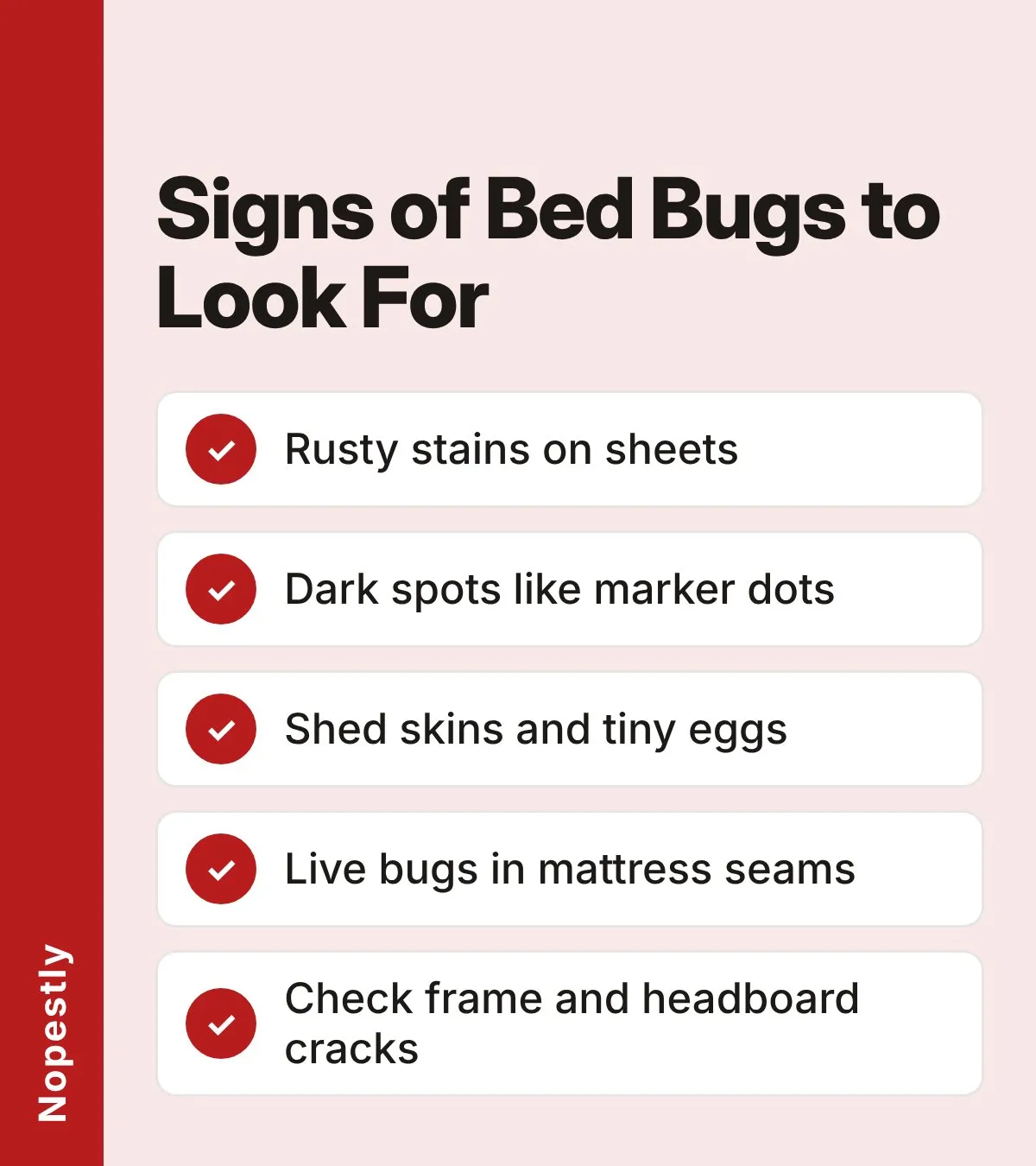
- Rusty or reddish stains on sheets or the mattress. These come from bugs that were crushed.
- Dark spots that look like marker dots. This is bed bug waste, and it can smear into fabric when wiped.
- Shed skins (casings) left behind as young bugs grow.
- Eggs and eggshells, usually tucked into seams and cracks.
- Live bugs, most often near where people sleep.
- A faint, sweet, musty smell. Pest-control sources note this is mainly noticeable in heavy infestations, so do not rely on your nose.
What about bites?
Bites are small, itchy and often appear in a line or cluster, but the EPA warns they are an unreliable sign. They resemble other insect bites and skin rashes, and some people show no reaction. If you are worried about a skin reaction, ask a doctor; this guide cannot diagnose bites.
What you need
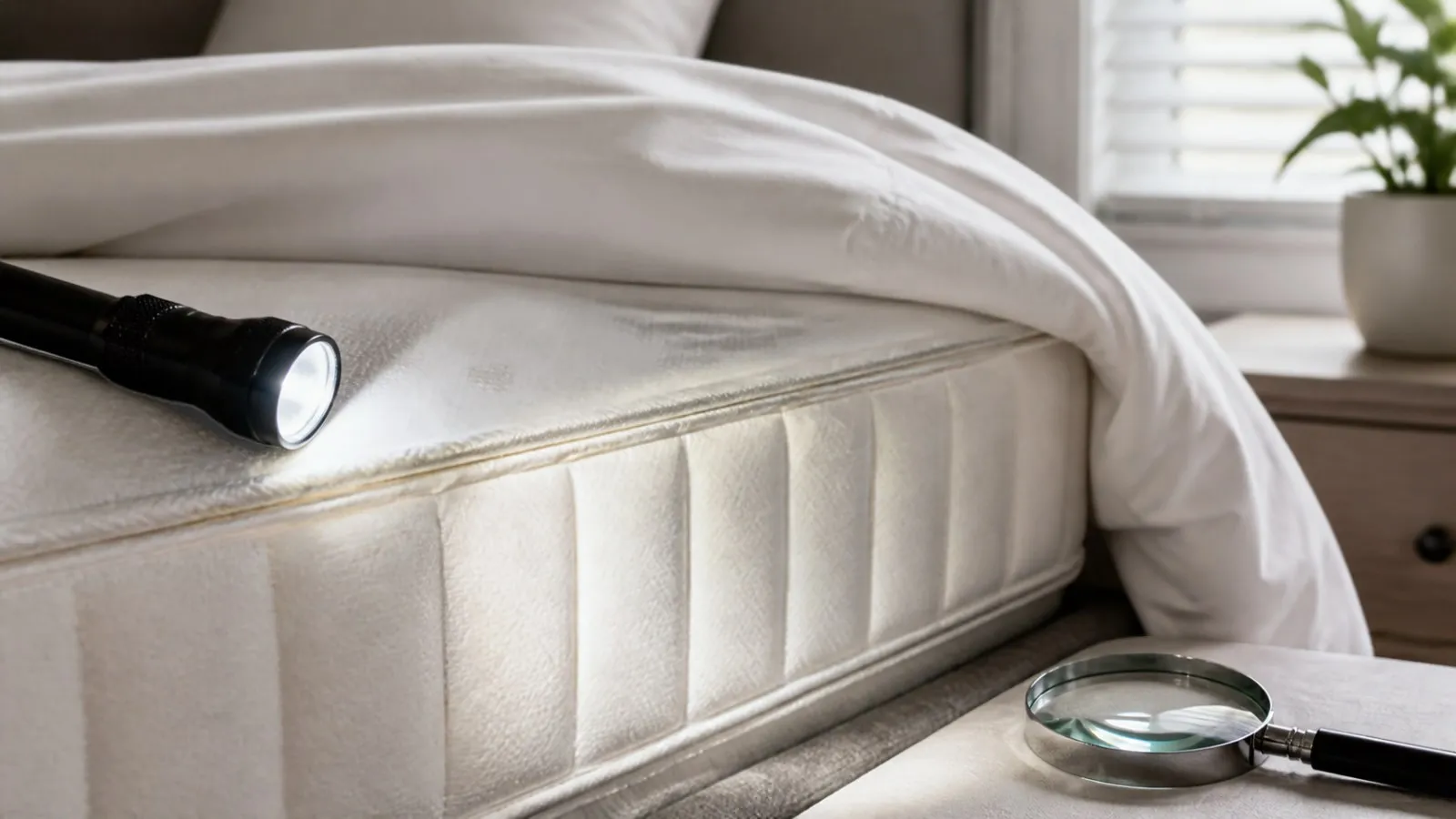
- A bright flashlight
- A magnifying glass (optional but helpful)
- A thin, stiff card or similar tool to run along seams
- Gloves and a clear plastic bag or tape for collecting a sample
- A clean, light-colored sheet to lay on the floor
How to check your bed, step by step
- Strip the bed. Remove sheets, pillowcases and the mattress protector one layer at a time. Look at each for rusty stains and dark spots, and keep any bedding you take off away from other rooms by bagging it.
- Check the mattress edges. Go slowly along the piping, seams and tags, on both sides. These are classic hiding places.
- Lift and inspect the box spring. Look at the seams, corners and the fabric on the underside, where the cover may be loose or torn.
- Examine the frame and headboard. Look at joints, screw holes and any cracks. A crack wide enough to hold a credit card could hide a bed bug.
- Look under and behind. Check under the bed and behind the headboard, including any loose wallpaper or wall hangings near the bed.
- Collect evidence. If you spot something, tape it to a card or place it in a sealed bag. This helps a professional confirm what it is.
Where else to look
If you find signs, or if the bed looks clean but bites continue, widen the search. The EPA says bed bugs can travel 5 to 20 feet from their hiding spots, and in heavier infestations they turn up in more places.
| Area | What to inspect |
|---|---|
| Upholstered furniture | Chair and couch seams, between cushions |
| Curtains | Folds and hems |
| Furniture | Drawer joints and nightstand cracks |
| Walls | Behind outlet covers, baseboards, where wall meets ceiling |
| Hardware | Screw heads and picture frames |
Is it really bed bugs?
Carpet beetles are often mistaken for bed bugs, according to the EPA, so confirm what you found before assuming an infestation. Other look-alikes, such as fleas and mites, can also cause bites. A pest professional or your local extension office can identify a collected sample.
A simple routine for a quick weekly check
You do not need to take the bed apart every time. A short routine, done when you change the sheets, catches most early signs:
- Look over the sheets and pillowcases for rusty smears and dark spots as you pull them off.
- Run the flashlight along the mattress piping and tags on the side nearest the headboard, then the foot.
- Peek behind the headboard and under the frame edges.
- Glance at the nightstand and the chair nearest the bed.
If you travel, apply the same idea to luggage and the hotel bed: check the headboard area and mattress seams on arrival, and keep your bags off the bed and floor until you have looked. After a trip, check the inside seams of your suitcase before it goes back to a closet. Secondhand furniture deserves the same inspection before it comes indoors, especially upholstered pieces with deep seams.
Common mistakes
- Relying on bites. Bite marks are not proof either way.
- Only checking the mattress top. The bugs hide in seams, frames and nearby furniture.
- Skipping a light. Dim rooms hide dark spots and small eggs.
- Moving bedding through the house. Bag it first so you do not spread any bugs.
- Treating before confirming. Sprays bought in a panic can scatter bugs. Confirm first, then make a plan.
Keep checking
Both male and female bed bugs need to feed at least every 14 days, per EPA guidance, so signs can appear soon after bugs are introduced. Do a quick inspection when you change the bedding, after trips, and after secondhand furniture comes in. Small infestations are hard to spot but much easier to treat.
When to call a professional
Contact a licensed pest professional if you find live bugs, shed skins or fresh stains, if you cannot identify what you found, or if signs show up in more than one room. Bed bugs are difficult to remove with home methods alone, and an early inspection can save time. In rented homes, tell your landlord or property manager promptly, since shared walls can allow bugs to spread.
Sources
 Save
Frequently asked questions
Can I tell I have bed bugs from bites alone?
No. Bed bug bites look like many other bites and rashes, and some people do not react to them at all. Look for physical evidence such as stains, shed skins or live bugs before deciding.
What do bed bugs look like?
Adults are reddish-brown, flat, oval and about the size of an apple seed. Young bugs are smaller and paler, and eggs are tiny, pale and about 1 mm long.
Where do bed bugs hide besides the mattress?
Bed frames, headboards, upholstered chairs and couches, curtain folds, drawer joints, behind outlet covers and baseboards. Any crack about as wide as a credit card can hide one.
How often should I check for bed bugs?
Check when you change the bedding and after you return from travel or stay in a shared space. Finding a problem early makes it far easier to deal with.