How to Get Rid of Rats in the Attic
Confirm rats in your attic, trap them safely, seal the entry points and clean up droppings and insulation, with a clear point for calling a professional.
 Save
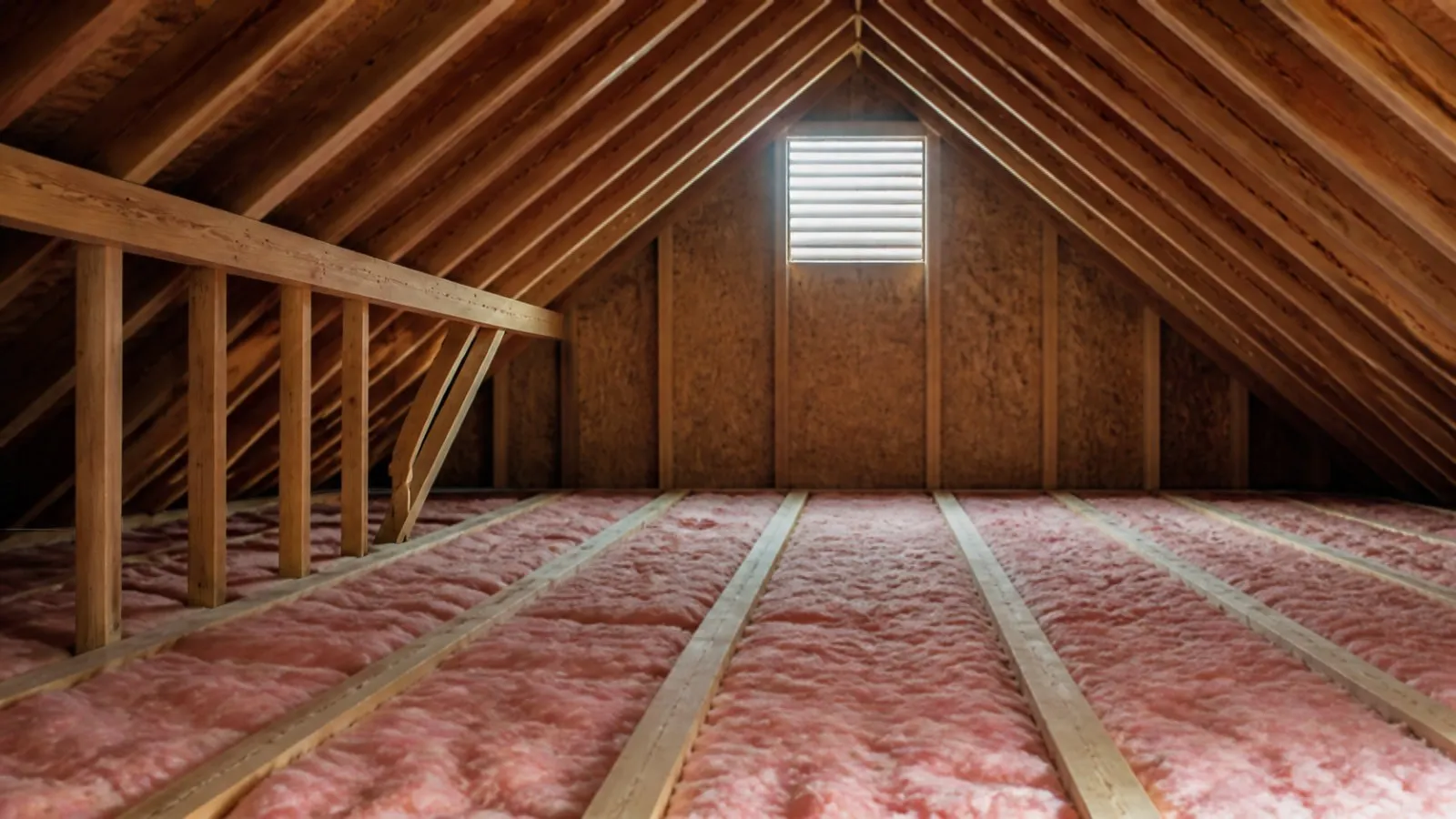
To get rid of rats in the attic, confirm where they are active, trap them with enough snap traps placed along their travel routes, and then seal every entry point once the activity stops. Cleaning up droppings and soiled insulation comes last, using wet methods and protective gear. Skipping the sealing step is the most common reason rats return.
Quick answer
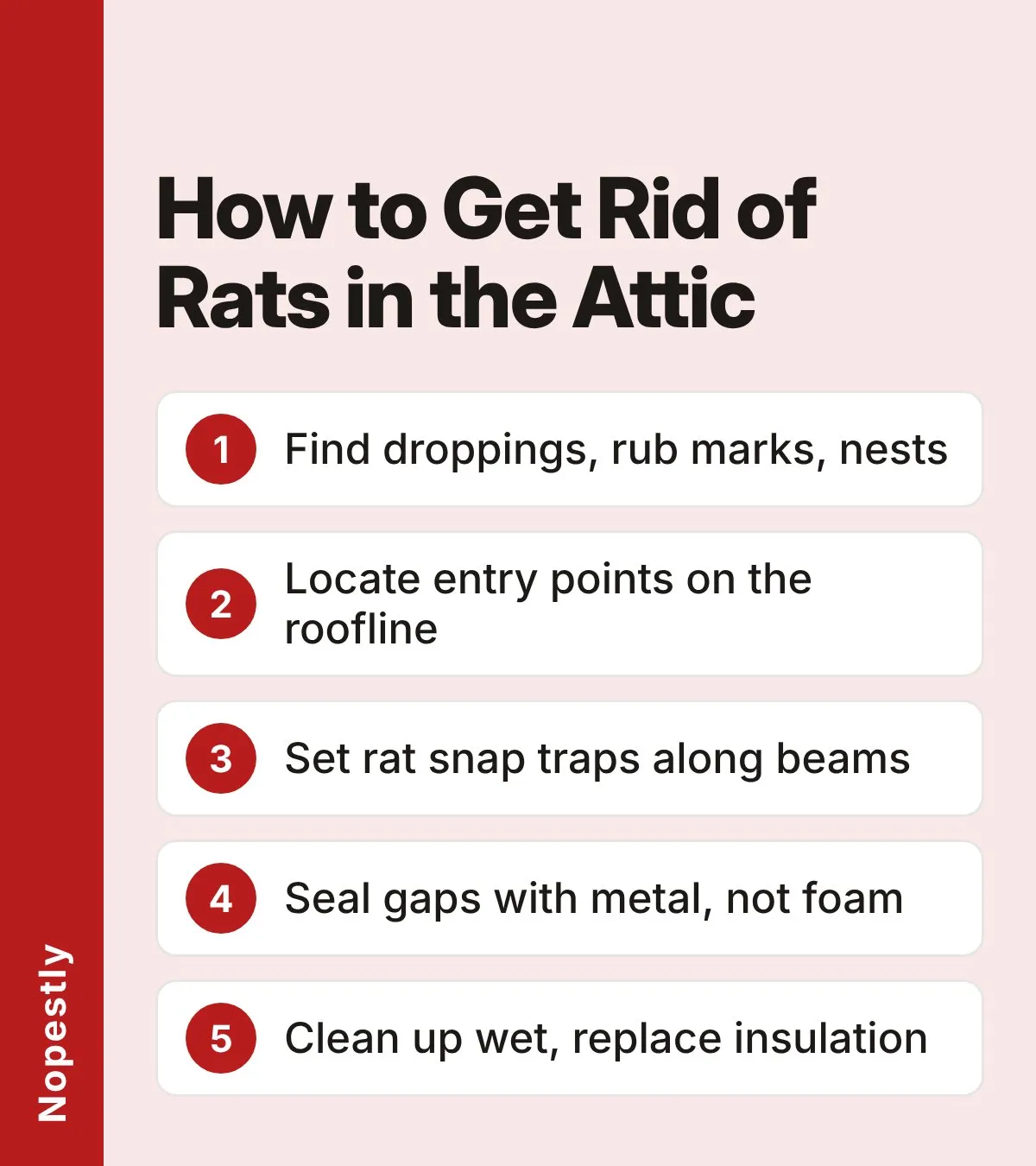
- Look for droppings, gnaw marks, grease rub marks, nests and noises at night.
- Find where they get in, usually along the roofline, vents, eaves and where wires or pipes enter.
- Set snap traps along beams, walls and runways, and check them daily.
- When traps stay empty for several days, seal the entry points with chew-resistant materials.
- Clean up with gloves, a mask and wet methods, and replace badly soiled insulation.
Signs of rats in the attic
Rats are easiest to spot by their evidence. Look for these signs:
- Noises: scratching, scurrying or thumping overhead, most often at dusk, at night and in the early morning.
- Droppings: larger than mouse droppings and found along beams, near nests and by food sources.
- Gnawing: chewed wood, wiring, pipes and stored boxes. Chewed wiring is a fire risk, so take it seriously.
- Rub marks: dark, greasy smears along beams, pipes and entry holes where rats travel repeatedly.
- Nests: shredded paper, insulation and fabric packed into a sheltered corner.
- Smell: a stale, musky odor in the attic or a sudden bad smell if an animal has died out of sight.
If you only hear light scratching, mice may be the cause instead. The cleanup and sealing steps are similar, but rats need stronger traps and sturdier sealing materials.
How rats get into attics
Rats are strong climbers and gnaw through weak materials, so they use the roofline as a highway. Branches that touch the roof, utility lines and climbing vines all give them a way up.
| Entry point | What to check | Better fix |
|---|---|---|
| Roof vents and soffits | Torn or loose screens, gaps under trim | Metal mesh or metal flashing |
| Eaves and fascia | Gaps where boards meet | Metal flashing, sealant |
| Pipe and wire openings | Gaps around the entry point | Metal mesh and sealant |
| Gable and ridge vents | Missing or damaged covers | Replace with sturdy metal screens |
| Trees and utility lines | Branches touching the roof | Trim branches back from the house |
Foam and plastic alone do not stop a rat. Use metal, hardware cloth or cement-based fillers, and use sealant only to hold them in place.
What you need
- Several large snap traps made for rats (not mouse traps)
- Bait such as peanut butter, nut butter or a small piece of dried fruit
- Disposable gloves, a well-fitting respirator or mask, and eye protection
- A flashlight or headlamp and a sturdy ladder
- Hardware cloth, metal flashing, or steel wool combined with sealant
- Disinfectant, paper towels, heavy trash bags and a spray bottle
Step-by-step: remove rats from the attic
| Step | What to do |
|---|---|
| 1 | Inspect carefully. Wear gloves and a mask, and look for droppings, rub marks and nests. Note where activity is heaviest, because that is where traps go. |
| 2 | Find the entry points. Go outside and check the roofline, vents, eaves and anywhere wires or pipes enter. Mark each opening so you can find it again. |
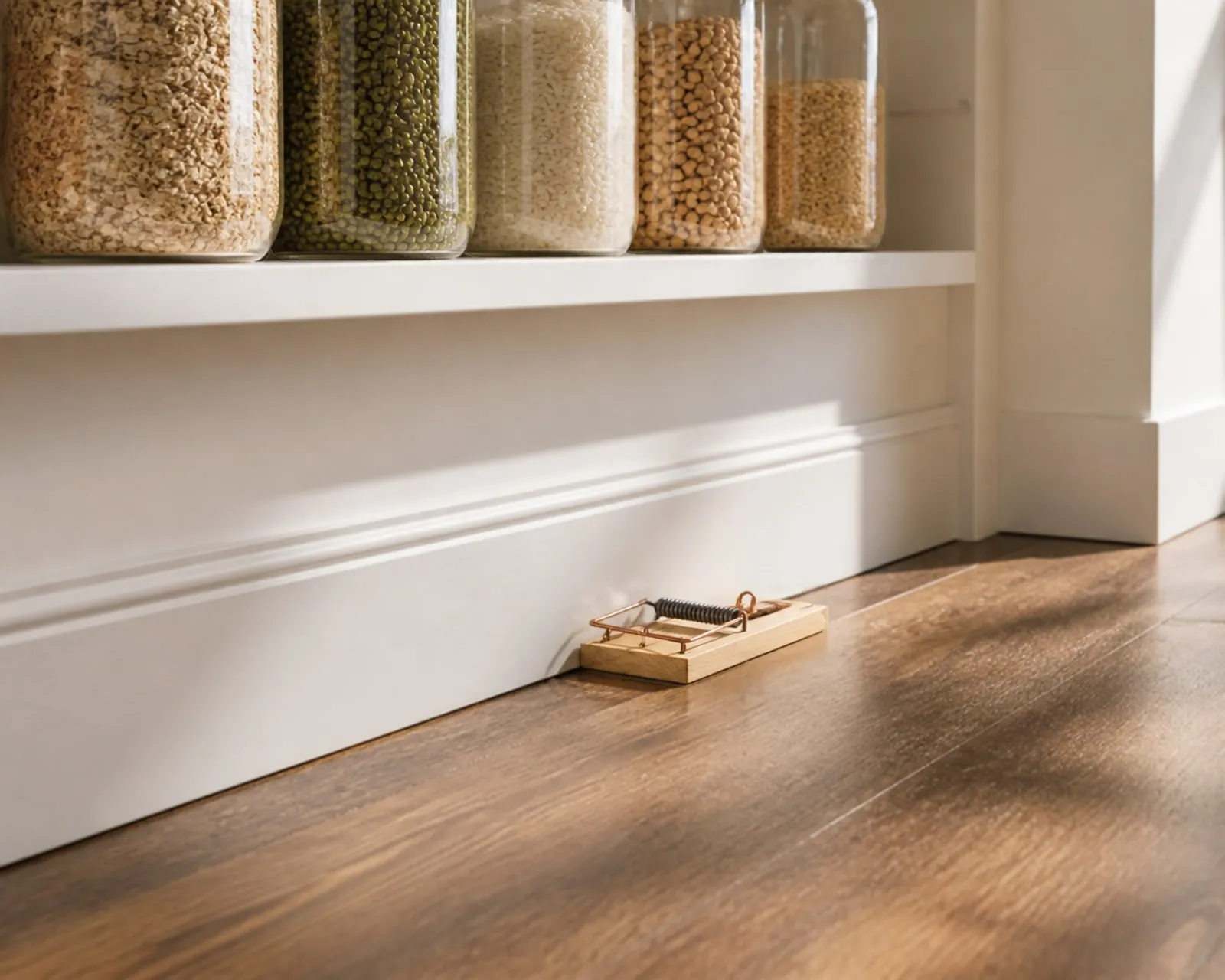
| 3 | Set the traps. Place snap traps along beams, walls and runways, with the trigger end toward the wall. Use several traps, because rats rarely come one at a time. |
| 4 | Check the traps daily. Rats can be wary of new objects, so bait the traps without setting them for a few days so the rats get used to them, then set them. Wear gloves when you handle a trap, and dispose of the rat in a sealed bag. |
| 5 | Remove food and shelter. Move stored items into sealed plastic bins, clear clutter and fix any water leak that gives rats a drink. |
| 6 | Seal the entry points. Once trapping shows the activity has stopped, close each opening with metal mesh, flashing or hardware cloth. Seal only when you are confident no rats remain inside, or they may die in the walls. |
| 7 | Clean up safely. Wet droppings and nests with disinfectant before wiping them up, and bag everything. Do not sweep or vacuum dry droppings, because that can put dust in the air. |
| 8 | Replace damaged insulation. Remove soiled insulation and replace it once the area is clean and sealed. |
Trapping tips
- Place traps where rats already travel, not in the middle of open floor.
- Set the trigger end close to the wall so the rat’s path crosses it.
- Use more traps than you think you need and move them if they stay empty.
- Keep traps out of reach of children and pets, and read the instructions before setting.
- Avoid handling bait or traps with bare hands.
Common mistakes
| Mistake | Why it fails |
|---|---|
| Sealing the holes before the rats are gone | Rats become trapped inside and may die in the walls |
| Using mouse traps | They are too small and can injure instead of kill |
| Plugging holes with foam or plastic only | Rats chew through soft materials |
| Cleaning up droppings dry | It can put dust from droppings into the air |
| Ignoring the outside | Branches, clutter and food keep attracting rats |
Preventing rats from returning
- Trim branches so they do not touch or overhang the roof.
- Keep trash in closed bins and store pet food and bird seed in sealed containers.
- Repair damaged screens, vents and roof trim promptly.
- Check the attic a few times a year, especially in fall, for fresh droppings or noise.
When to call a professional
Call a licensed pest professional if you hear activity again after a few weeks of trapping, if you find chewed wiring, if you cannot safely reach the roofline, or if droppings and soiled insulation cover a large area. A professional can also do a full exclusion job and large-scale cleanup, which is hard to do safely alone. Local rules differ across the US, Canada, the UK and Australia, so check what your area requires for pest control and for any rodenticide.
Sources
 Save
Frequently asked questions
How do I know it is rats and not mice?
Rat droppings are larger than mouse droppings, and rats make heavier thumping and scurrying sounds, often at dusk or at night. Gnawing on wood, wiring or pipes and greasy rub marks along beams also point to rats.
Should I use poison in the attic?
Poison is risky because a rat can die inside a wall or ceiling where you cannot reach it, and baits can harm children, pets and wildlife. Traps placed along travel routes give you more control; if you consider any rodenticide, follow the label exactly or ask a licensed professional.
Do I need to replace the attic insulation?
Insulation that is soiled with droppings, urine or nesting material usually needs to be removed and replaced, because it cannot be cleaned properly. Heavy contamination is a good reason to hire a professional cleanup service.
Why do rats keep coming back?
Usually because an entry point was missed or food and shelter are still available outside. Sealing every gap and trimming branches and clutter near the roof is what stops a repeat visit.