Wasp Nest Removal: What You Can Safely DIY
Learn which wasp nests you can treat yourself, the best time of day, what to wear and spray, and which nests need a professional instead.
 Save
You can safely treat a small, exposed paper wasp nest yourself if you are not allergic to stings, you can reach it comfortably, and you work at night with the right gear. Nests that are large, enclosed in a papery shell, hidden in a wall or near a busy entrance are better left to a professional.
Quick answer
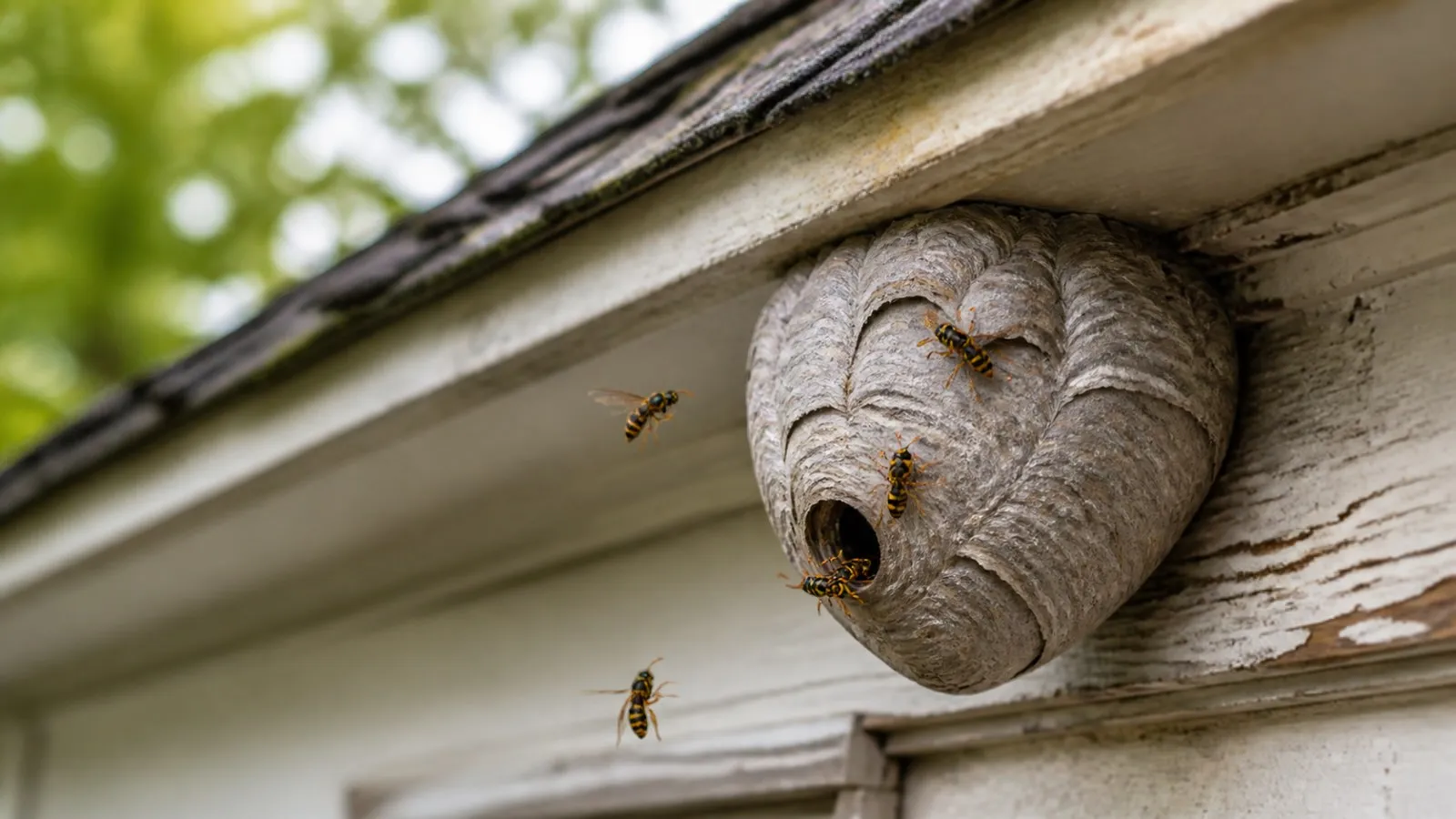
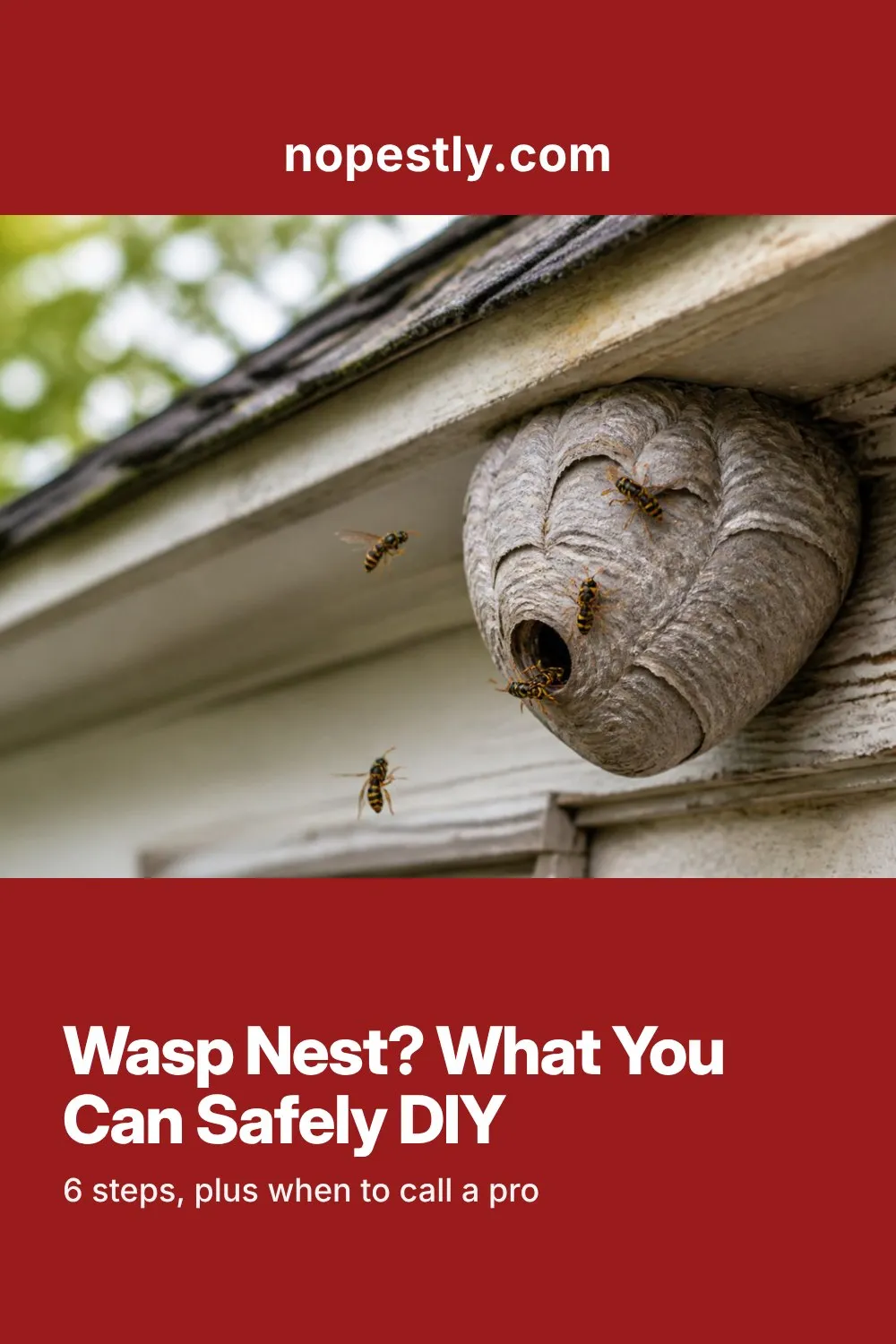
- Identify the nest first: open comb (paper wasps), gray paper ball (yellowjackets or baldfaced hornets), or a hole in the ground (usually yellowjackets).
- Low-traffic nest? Leaving it alone until freezing weather is a valid option.
- If you treat it, do it at night or in the early morning, dressed in sealed-up clothing and eye protection.
- Never seal the entrance of a nest inside a building.
- Skip the DIY entirely if you have a sting allergy.
Should you remove it at all?
Extension specialists point out that wasps generally leave people alone when the nest is not near human activity. Wasps also do not reuse nests: the colony dies off in the fall, and a nest left in place is simply an empty shell by winter. University of Minnesota Extension notes that freezing temperatures, usually the mid-to-upper 20s °F, kill the workers and queen.
Act sooner if the nest sits beside a door, deck, mailbox, playset or walkway, or if anyone in the household has a sting allergy. Colonies peak in late summer, so the most defensive wasps are around in August through fall. Small nests found early in the season are much easier and safer to deal with.
Identify the nest type
| Nest type | What it looks like | Typical location | DIY? |
|---|---|---|---|
| Paper wasp | Single open comb, no outer cover | Under eaves, rails, any horizontal surface | Often yes, if small and reachable |
| Yellowjacket (aerial) | Enclosed gray paper envelope | Shrubs, trees, eaves | Only if small; large ones need a pro |
| Baldfaced hornet | Large enclosed paper ball | Tree limbs, building eaves | Usually a pro, or wait for frost |
| Yellowjacket (ground) | A hole with wasps flying in and out | Lawn, old rodent burrow | Possible with dust, but risky |
| Hidden nest | Wasps entering a small crack or gap | Wall void, attic, concrete block | No, call a professional |
Also check that you are not dealing with bees. Honey bees and bumble bees are valuable pollinators and are usually best preserved. If honey bees must move, an experienced beekeeper can relocate them. Compare the insect against photos on an extension service page before you act.
What you need
- Long sleeves, long pants, closed shoes and socks. Tuck pant legs into socks or tape them closed, and tape glove cuffs.
- Eye protection and a mask or respirator. Stinging insects target the face, and the gear also limits pesticide exposure.
- A wasp and hornet aerosol with a long spray range (many reach 15 to 20 feet), or an insecticide dust and a bulb duster for ground or enclosed nests.
- A flashlight with a red filter, placed so flying wasps are drawn away from you.
- A clear escape route to a door you can close behind you.
Read the product label first. It lists the allowed sites, protective equipment and disposal rules, and following it is a legal requirement as well as a safety one.
Step-by-step: treat a small exposed nest
| Step | What to do |
|---|---|
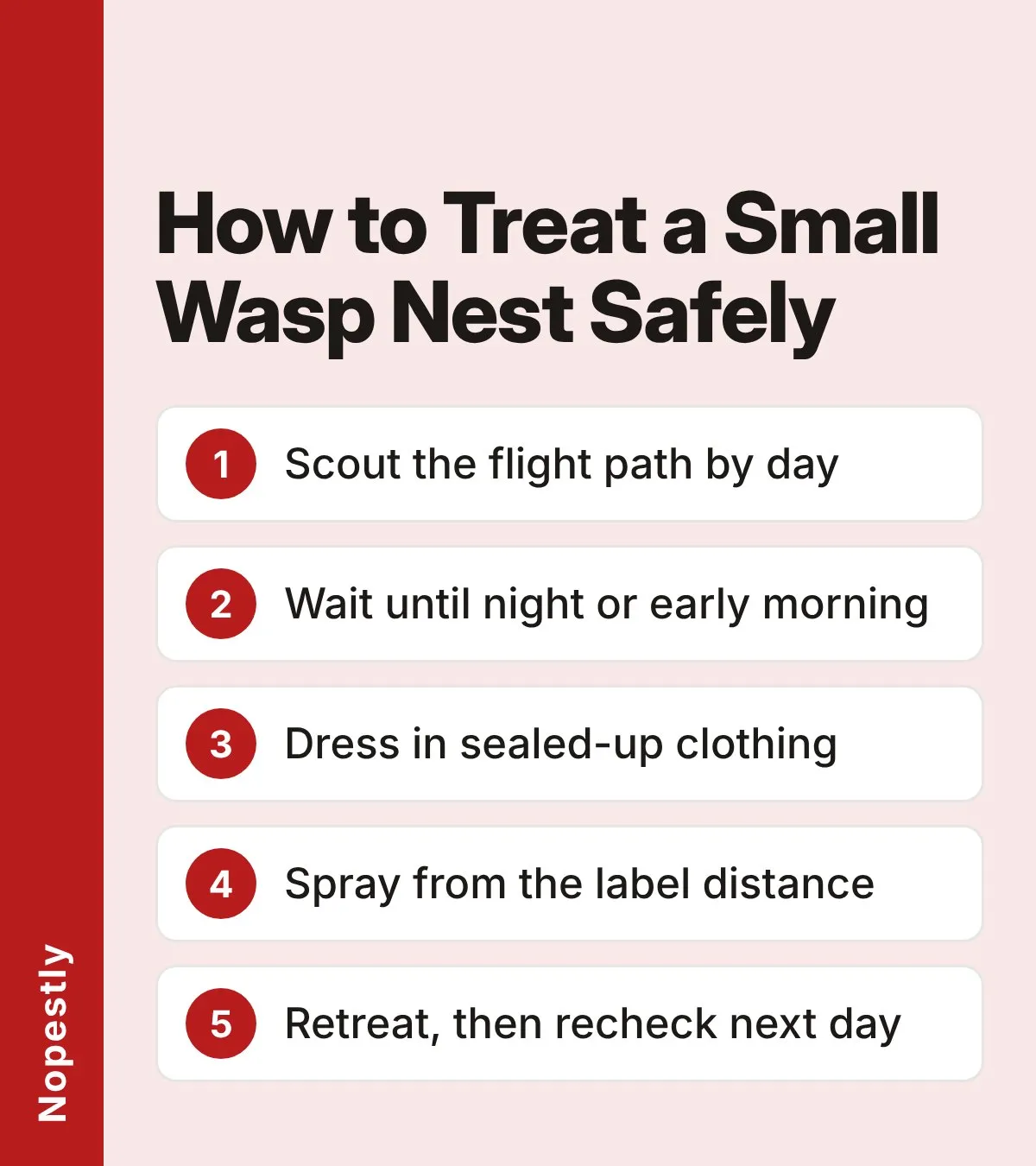
| 1 | Scout from a distance. In daylight, watch from about 10 to 15 feet away and note where the wasps fly in and out. Confirm the nest type and that it is small enough to handle. |
| 2 | Pick your time. Wait until late evening, night or very early morning when wasps are less active and cannot see well. Warn everyone in the household to stay inside. |
| 3 | Dress and prepare. Put on sealed-up clothing, eye protection and a mask. Set a red-filtered light so it draws flying insects away from your position. |
| 4 | Spray from the label distance. For a paper wasp nest, coat all of the comb. For an enclosed nest, aim into the entrance opening. Stay at the product’s stated range, or use an extension pole to apply from farther away. |
| 5 | Retreat calmly. Back away slowly without swatting. If workers turn aggressive, leave quickly and come back after a few hours or days. |
| 6 | Check the next day. If wasps are still flying after a day, repeat the treatment, then knock the empty nest down with a pole and dispose of it as the label directs. |
Ground nests
Yellowjackets often take over old rodent burrows in spring. Treating the hole with insecticide is safer than digging. Options include:
- Dust. Puff or pour dust into the entrance at night, back off, and return later to repeat. Penn State Extension notes this works better than liquid. Michigan State Extension says one dose can be enough, because workers carry the dust inside and the colony normally dies within one or two days.
- Foam. Inject foam until the hole will take no more.
- Soil drench. Pour a liquid concentrate into the entrance and onto the ground above, since the nest may be several feet from the opening.
Leave the opening uncovered while the wasps come and go. Move away fast after applying. If you spot a burrow in spring, filling it in can stop a queen from using it.
Common mistakes
- Treating in the daytime. Foragers are out and the colony is on alert.
- Using a ladder. A sting at height is a fall risk. Nests needing a ladder are a pro job.
- Sealing a nest inside a wall. Surviving wasps may chew their way into your home.
- Knocking the nest down first. Always treat it, wait, then remove it.
- Relying on traps. They only reduce nuisance foragers.
- Ignoring the label. Using a product on a site it is not approved for can harm you and your pets.
- Spraying a protected bumble bee nest. Bumble bee nests are usually best left alone with the area fenced off.
When to call a professional
Hire a licensed pest professional when:
- anyone nearby is allergic to stings, including you, or you are unsure how you would react;
- the nest is inside a wall, attic, or other concealed space;
- it is a large enclosed yellowjacket or baldfaced hornet nest;
- the nest is near a doorway, walkway, school or playground;
- you need a ladder or must enter a tight space to reach it;
- you cannot manage the sting risk comfortably.
A professional may take time to schedule and usually charges a call-out fee, but carries liability insurance and the right equipment. Honey bees in walls typically need a beekeeper rather than an exterminator.
Severe reactions to stings, such as trouble breathing or throat swelling, are emergencies that need immediate medical care.
Sources
 Save
Frequently asked questions
What is the best time of day to remove a wasp nest?
Late evening, night or very early morning, when most wasps are inside the nest and less active. Scout the flight path by day from a distance, then treat after dark, using a red light if you need to see.
Can I just leave a wasp nest alone?
If it is away from doors, walkways and play areas, yes. Wasps do not reuse nests, and the colony dies off after hard frosts, so a low-traffic nest can wait until winter.
Should I seal the hole of a nest inside a wall?
No. Sealing the opening before the wasps are dead can push them to chew through into the living space. Call a pest professional for nests inside walls, attics or other hidden spaces.
Do wasp traps get rid of a nest?
No. Traps can reduce the number of foraging wasps around a picnic or barbecue, but they cannot eliminate an established colony.