Rodent Control: The Tools and Materials You Need
A practical shopping and prep list for rodent control: snap traps, bait, gloves, hardware cloth, steel wool and sealants, plus how each one is used.
 Save
Good rodent control starts with the right kit. You need traps and bait to catch the animals that are already inside, and sealing materials to stop new ones from coming in. This guide lists what each item is for, so you buy only what the job needs.
Key points
- Match the trap to the pest. Confirm whether you have mice or rats first, because the wrong trap size will not catch the target.
- Buy several traps. Rodents breed quickly, so one trap is rarely enough. Set a group along the walls.
- Seal as well as trap. Mice can gnaw through openings larger than 1/4 inch (0.6 cm), and rats through openings larger than 1/2 inch (1.3 cm).
- Use metal, not soft filler. Hardware cloth and sheet metal hold up to chewing. Steel wool is a temporary plug.
- Protect yourself. Gloves are a must when you handle traps, droppings or animals.
- Plan for the long run. Control often needs ongoing trapping, because new rodents can move in from elsewhere.
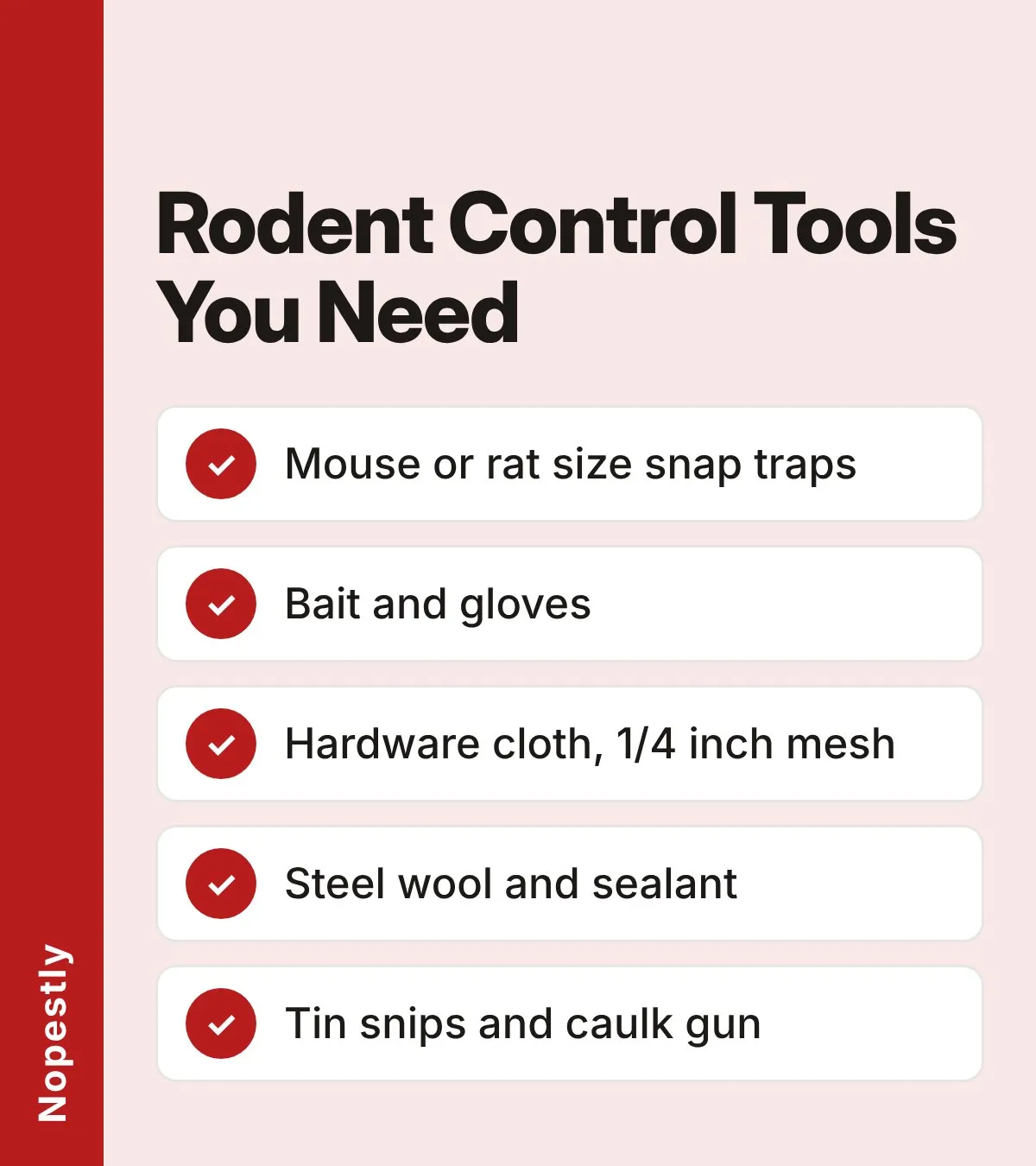
Tools and materials
Here is the full list, grouped by job. Not every home needs all of it: the first part is for catching, the second for sealing, the third for safety and cleanup.
Catching
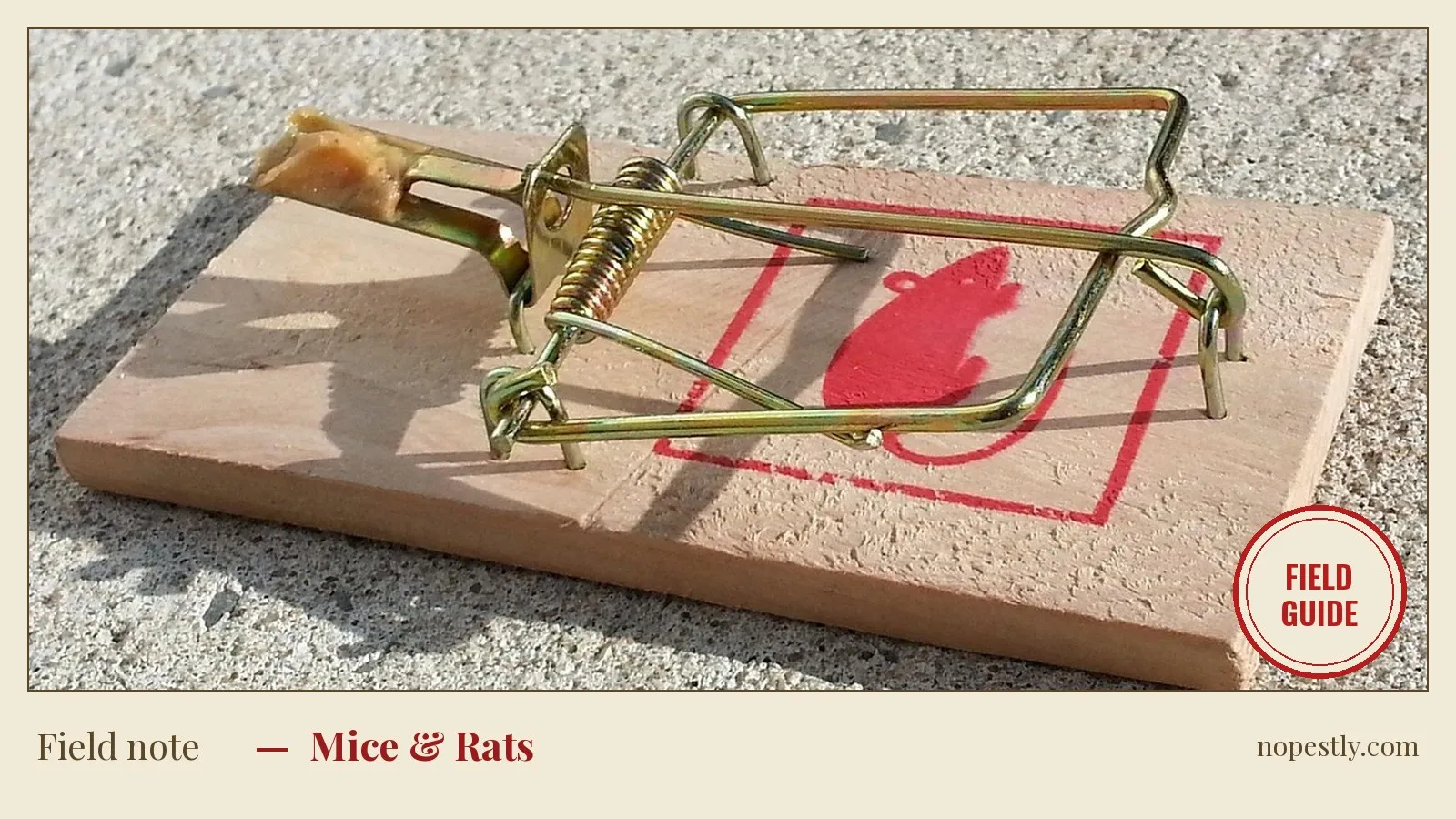
- Snap traps (mouse size or rat size): the main tool. Mouse traps and rat traps are different sizes, so buy the one that matches the animal you have. If old spring traps are hard to set, newer designs are easier. Kill-in-trap models exist for mice but not for rats.
- Bait: a pea-sized amount of a food the rodent already eats, pressed into the trap’s recess or onto the trigger. For mice, a small piece of cotton or dental floss can work as a lure. Avoid peanut butter where someone with a peanut allergy may handle the traps.
- Stakes, string or a weighted milk crate: traps should be secured so a rodent cannot drag one away. A weighted or staked crate placed over a trap outdoors helps keep larger wildlife and pets out.
Sealing
- Hardware cloth (wire mesh): the workhorse for holes. Sources list 24-gauge, 1/4-inch mesh to exclude mice, and 19-gauge, 1/2-inch mesh to exclude rats. Use 1/4-inch hardware cloth behind a patch for holes 3 inches (8 cm) or wider.
- Steel wool or copper mesh: packed into small gaps around pipes and cables as a temporary plug. Steel wool can rust and leave stains.
- Sealant and patching compound: foam or caulk to hold mesh in place, and a cement-based patch for masonry holes. Sealant alone is soft, so back it with metal.
- Sheet metal: galvanized sheet metal, 24-gauge or heavier, for wall or pipe barriers, and 22-gauge or heavier for door edging and kick plates.
- Door sweep or threshold seal: door gaps should not exceed 1/4 inch (0.6 cm).
- Basic hand tools: tin snips for cutting mesh and metal, a utility knife, a caulk gun, work gloves and a flashlight to inspect dark gaps.
Safety and cleanup
- Disposable gloves and work gloves: rodents carry diseases, so wear gloves whenever you handle traps or animals.
- Double bags for disposal: double-bag a dead rodent and put it in the trash, or discard the rodent and trap together. Check local rules for disposal first.
- Disinfectant, paper towels and a covered trash can: for wet cleanup of droppings. See how to get rid of mice in your house for the safe cleanup steps.
What to buy first
If you are not sure where to start, this table matches a goal to the minimum kit.
| Goal | Minimum kit | Why |
|---|---|---|
| Catch mice already inside | 6 or more mouse snap traps, bait, gloves | Several traps along walls cover more runways |
| Catch rats in an attic or garage | Rat-size snap traps, bait, stakes, gloves | Rat traps are larger and need to be secured |
| Block small gaps | Steel wool, sealant, tin snips | Quick temporary plugs while you plan permanent repairs |
| Permanent repair of holes | Hardware cloth, sheet metal, cement patch | Metal and masonry cannot be chewed through |
| Stop door entry | Door sweep, sheet metal kick plate | Gaps under doors are a common way in |
How the kit works together
Set traps first, seal second, or do both at once. If you seal every hole before catching the animals inside, you can trap them in the walls. Set traps while you inspect, then seal as the catches stop.
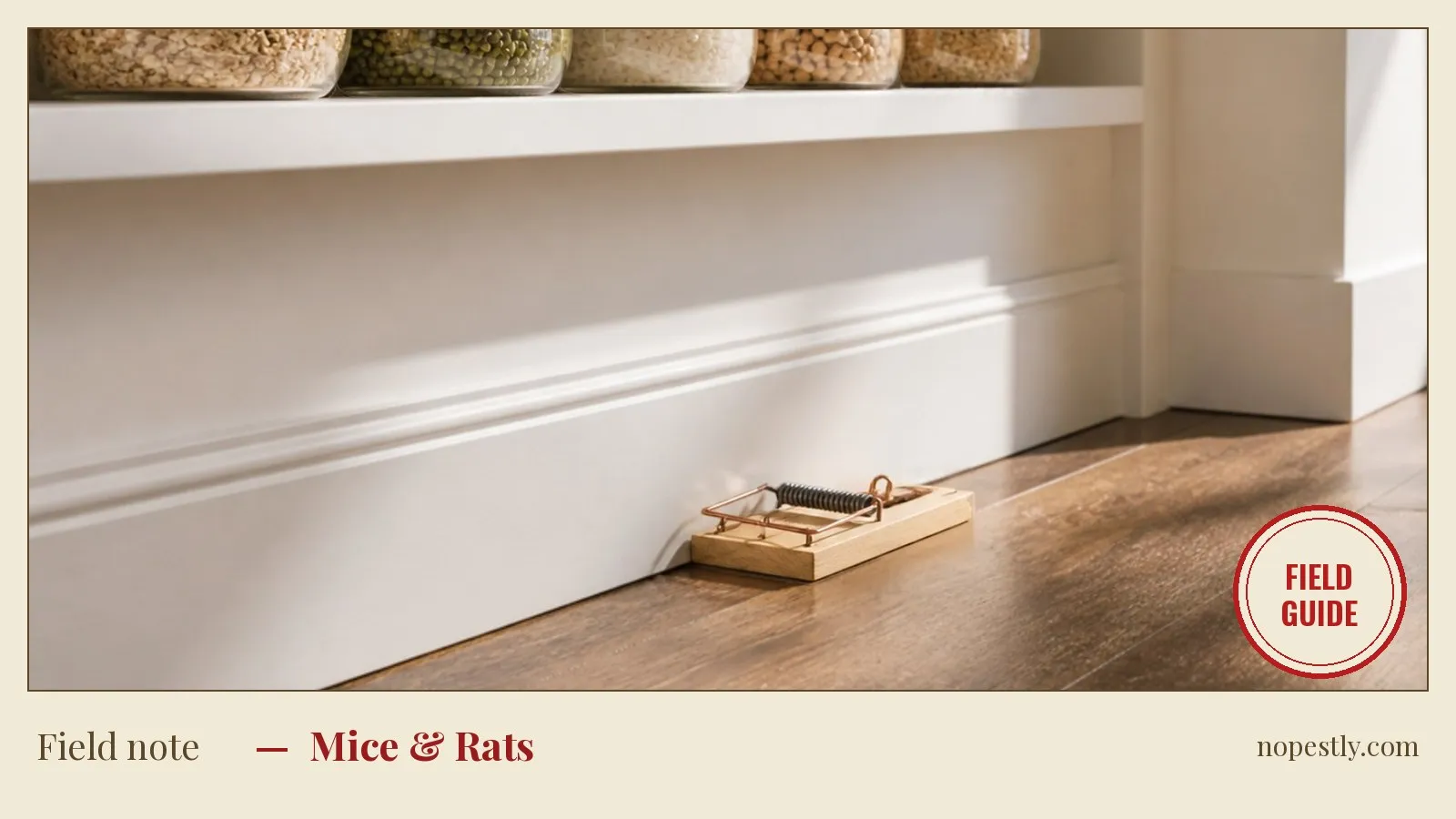
Place traps where rodents travel. Put them along a wall, fence line or planter edge. Either face the triggers toward the wall or set traps side by side with the triggers pointing away from each other. Some rodents will not run along walls, so if the last few will not take the bait, try other spots.
Set traps at night. Extension guidance suggests setting traps only at night and leaving them unset during the day, which also lowers the risk to pets and wildlife.
Prebait for rats. Put out baited but unset traps for a couple of days, until the bait is being taken. This helps adult rats get used to the traps, so you do not catch only young ones. For rat-specific steps, see how to get rid of rats in your attic.
Seal with metal. Cover larger holes with hardware cloth, then finish with sealant or patching compound. A full home sweep is in the pest-proof home checklist.
Common buying mistakes
| Mistake | Better choice |
|---|---|
| Buying one trap | Buy several and set them in a line along the wall |
| Using mouse traps for rats | Match the trap size to the pest |
| Plugging holes with steel wool only | Use steel wool as a stopgap, then add hardware cloth or sheet metal |
| Using peanut butter around allergy-prone households | Use another food the rodent is eating, or cotton or floss for mice |
| Skipping gloves | Always wear them when handling traps or droppings |
When to call a professional
Call a licensed pest professional if you are catching animals week after week with no drop in activity, if you cannot reach or safely repair entry points on a roof or in a wall, or if the activity is in a space you cannot inspect. Poison baits carry risks for children, pets and wildlife, so ask a professional rather than guessing if you think you need them.
Sources
 Save
Frequently asked questions
How many snap traps do I need?
Set several, because rodents breed quickly and a single trap rarely clears a problem. Place them along walls and near droppings or gnaw marks, and add more if the traps keep getting emptied of bait.
What is the best bait for a mouse trap?
Use a pea-sized amount of a food the rodent is already eating. For mice, cotton or dental floss can also work as a lure because they collect it for nesting.
What mesh size stops mice and rats?
Extension guidance lists 1/4-inch hardware cloth (24-gauge) for mice and 1/2-inch hardware cloth (19-gauge) for rats. Steel wool alone is only a temporary plug.
Do I need gloves for rodent control?
Yes. Rodents carry diseases, so wear gloves whenever you handle traps, droppings or a trapped animal, and wash your hands afterward.